The industry's increasing mandate for IP6K9K protection level for key connectors is not an over-specification; it is a direct, calculated response to the unique and severe environmental challenges faced by NEVs, where failure can equate to vehicle stoppage, costly damage, or critical safety hazards.
The rise of New Energy Vehicles (NEVs), encompassing Battery Electric Vehicles (BEVs) and Plug-in Hybrid Electric Vehicles (PHEVs), represents more than a shift in propulsion. It is a fundamental re-engineering of the automotive electrical architecture, centered around high-voltage (400V/800V) batteries and sensitive power electronics. In this context, the humble electrical connector is elevated to a critical safety and reliability component. The industry's increasing mandate for IP6K9K protection level for key connectors is not an over-specification; it is a direct, calculated response to the unique and severe environmental challenges faced by NEVs, where failure can equate to vehicle stoppage, costly damage, or critical safety hazards.
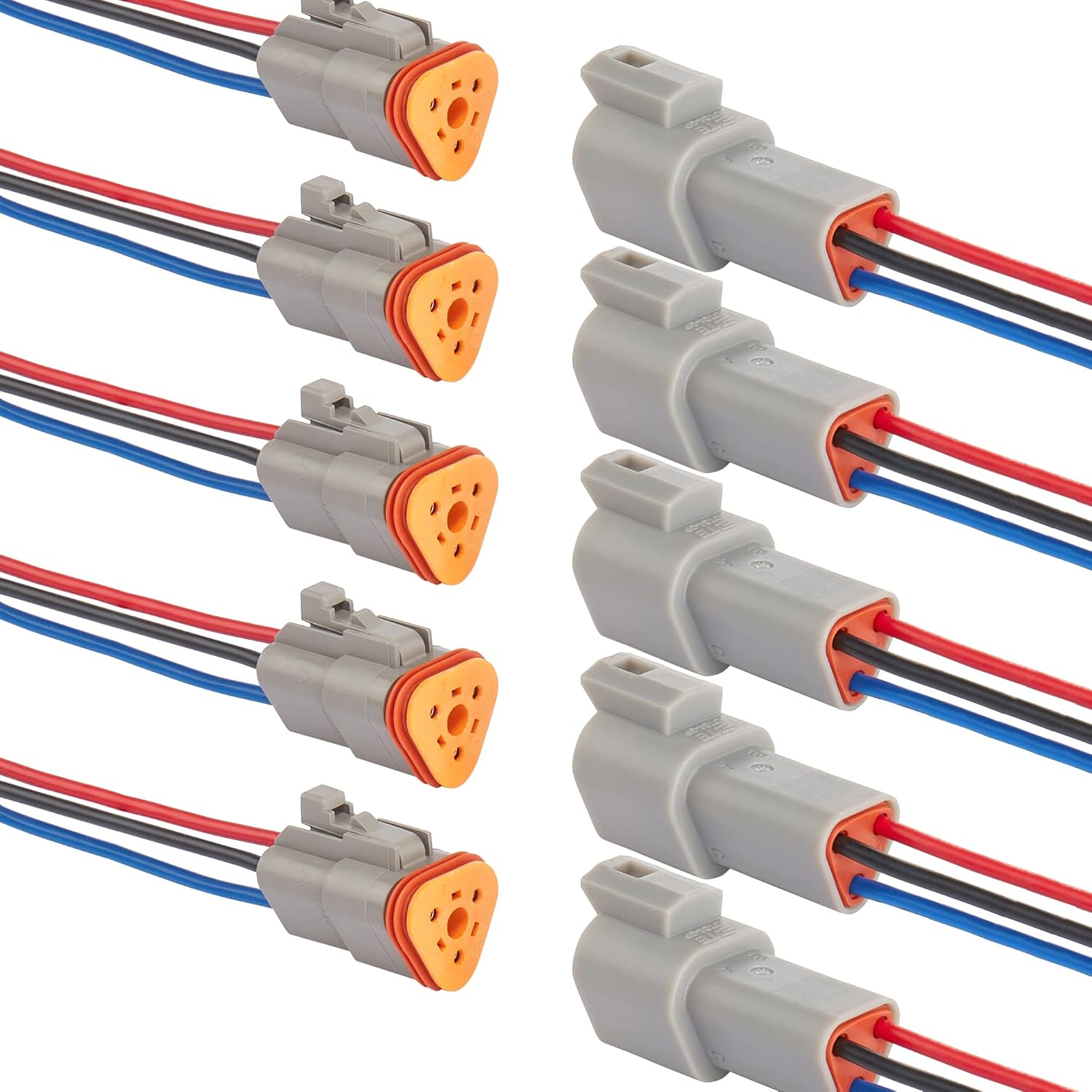 Decoding IP6K9K: The Twin Pillars of Extreme Protection
The IP (Ingress Protection) code, defined by IEC 60529, is a two-digit standard. The "6K" and "9K" suffixes represent enhanced tests defined in DIN 40050-9, a German standard adopted by the global automotive industry for its rigor.
- First Digit (6K): Complete Dust Ingress Protection. The "6" indicates total protection against dust. The "K" suffix specifies that the test is conducted with a vacuum or overpressure differential, ensuring even fine, abrasive dust cannot penetrate under real-world driving conditions where pressure differentials exist. This is crucial for preventing conductive dust from causing tracking or short circuits across high-voltage terminals.
- Second Digit (9K): Protection Against High-Temperature, High-Pressure Water Jets. This is the defining requirement. Unlike the standard IPX7 (temporary immersion) or IPX8 (continuous immersion), IP9K simulates the most aggressive cleaning processes:
- Water Pressure: 8-10 MPa (80-100 bar) at a distance of 0.1-0.15 meters.
- Water Temperature: 80°C.
- Spray Angle: Multiple angles from 0° to 90°.
This replicates high-pressure steam cleaning, underbody wash in commercial car washes, and driving through deep puddles at high speed, where scalding, high-pressure water is forced into every crevice.
Why NEVs Demand This Extreme Standard: The New Attack VectorsTraditional internal combustion engine (ICE) vehicles also face water and dust, but NEVs introduce new, critical vulnerabilities that make IP6K9K essential.
1. The High-Voltage Imperative: Safety from Arcing and Short Circuits
- NEVs operate with propulsion systems at 400V, 800V, or higher. Introducing moisture or conductive dust into a connector carrying these voltages can lead to:
- Tracking and Arcing: Water and contaminants can create a conductive path along insulation surfaces, leading to high-voltage arcing. This can cause instantaneous failure, melt components, and is a severe fire risk.
- Corrosion of High-Current Contacts: Corrosion at high-current contacts (e.g., in battery packs, motor inverters) increases resistance, leading to localized overheating (I²R losses) and thermal runaway risk.
- BMS Signal Integrity: The Battery Management System (BMS) relies on low-voltage sense wires monitoring each cell. Moisture ingress in these connectors can corrupt vital voltage and temperature readings, causing the BMS to miscalculate state of charge or fail to detect a thermal event.
2. New High-Risk Locations and Exposure Scenarios
- Underbody and Battery Pack Connectors: The traction battery pack, often forming the vehicle's underbody "skateboard," is directly exposed to road spray, salt, gravel, and high-pressure car wash jets. Its high-voltage service disconnect, cooling system, and communication connectors are prime candidates for IP6K9K.
- Electric Drive Unit (EDU) Connections: Connectors on the motor and inverter are exposed to similar underbody conditions and the intense heat of the motor bay, where they must also withstand high-temperature washdown.
- Charging Inlets and Ports: While the mated charging coupler is sealed, the vehicle's charging inlet is perpetually exposed. It must withstand all weather conditions and resist high-pressure washdown to prevent corrosion that could later compromise the charging connection's safety.
3. The Commercial Fleet & Industrial Cleaning StandardNEVs, especially commercial vans, trucks, and buses, are subject to industrial-grade cleaning in fleet depots using high-pressure, high-temperature systems. An IP67-rated connector (designed for static immersion) can easily be breached by a sustained, close-range 100-bar jet of hot water. IP6K9K validates the connector's resilience in this exact scenario.
Engineering for IP6K9K: A Multi-Layered DefenseAchieving and maintaining IP6K9K performance over a vehicle's 10+ year lifespan requires a systems-level design approach:
- Multi-Stage Sealing Philosophy: Reliance on a single O-ring is insufficient. Connectors employ a combination of:
- Interface Seal: A primary radial or face seal between mated housings.
- Wire Seal/ Grommet: A perimeter seal for each wire, often using thermoplastic elastomers (TPE) that bond to cable jackets.
- Secondary Sealant/ Potting: Internal potting or sealant applied after assembly to block any potential capillary paths along wires or contacts.
- Robust Mechanical Design: Housings must resist deformation under high-pressure spray. This requires high-strength engineering plastics and secure latching mechanisms (CPA - Connector Position Assurance) that cannot be vibrated or forced open by water pressure.
- Pressure Equalization and Drainage: For some sealed compartments, managed vents or membranes that allow air pressure to equalize while blocking liquid are used to prevent pressure build-up that could force water past seals.
- Material Compatibility: All seals and plastics must withstand long-term exposure to 80°C+ hot water, automotive chemicals (oils, coolants), and extreme thermal cycling without cracking, hardening, or losing elastic recovery.
The Validation and Cost of CompromiseVerification is as critical as design. IP6K9K testing subjects the fully assembled connector (mated, with cables) to the specified high-pressure, high-temperature spray from all angles, followed immediately by validation of electrical integrity (insulation resistance, dielectric withstand test).
Choosing a lower protection standard is a high-risk compromise. The cost of a single field failure due to water ingress—in terms of warranty claims, safety recalls, brand reputation damage, and potential safety incidents—dwarfs the incremental cost of specifying and implementing IP6K9K-rated components from the outset.
Conclusion: A Foundational Specification for the Electric EraFor New Energy Vehicles, the IP6K9K rating transcends a box to check on a datasheet. It is a fundamental design philosophy that acknowledges the hostile, real-world environment where high-voltage electricity and sensitive electronics must coexist. It is the engineering commitment that ensures a vehicle can endure the brutal cleaning required to maintain a battery thermal management system, traverse a flooded road, or simply survive a decade of winters without its electrical heart succumbing to the elements. As the industry marches towards higher voltages and full autonomy, the connectors serving these systems will not only need to carry power and data but must do so from behind an impregnable, IP6K9K-rated shield. This is the new baseline for automotive resilience.
 Decoding IP6K9K: The Twin Pillars of Extreme Protection
