The resistance of the connector terminal consists of three parts:
1) The resistance of the permanent connection, such as: crimping resistance, IDC connection resistance, welding resistance, etc., the size of this resistance is tens to hundreds of micro-ohms (uΩ);
2) The resistance of the separable contact interface, that is, the contact resistance of the male and female terminals, under the action of 100gf positive pressure, is several milliohms (mΩ);
3) Material resistance, which is determined by factors such as the conductivity of the material, the thickness of the material, and the geometric length of the material.
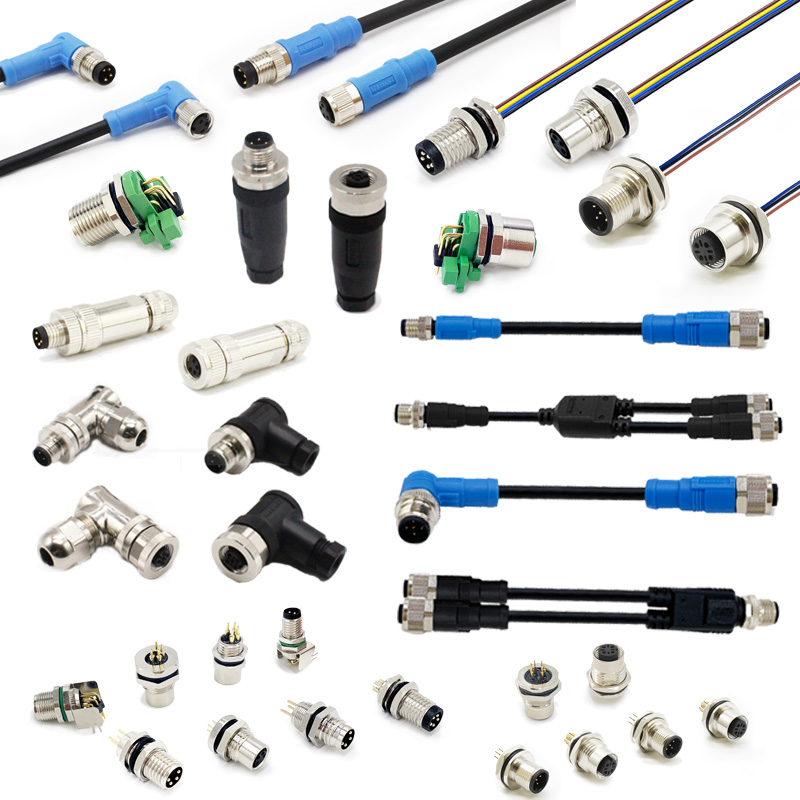
1. Current carrying capacity of permanent connection
The resistance of permanent connection is determined by the terminal connection design, the wire/PCB used, and the termination process. In recent years, many companies have paid more and more attention to the quality of crimping. For a terminal, under the premise of guaranteed crimping (termination) quality, the permanent connection has little effect on the current. Of course, a poor crimping is also the main cause of burn-in. The analysis in this article is based on the situation where the crimping (termination) is done perfectly. The permanent connection is equivalent to the extension of the wire or PCB, so its current carrying capacity is not discussed separately.
2. Current carrying capacity of separable interface
- Over-temperature temperature rise
We all know that the actual contact on the contact interface is point contact. When current passes through, this contact point (A-spots) will generate temperature rise. We call the temperature rise generated by these points on the contact interface as over-temperature temperature rise. Since A-spots are very small, a single contact will react to the current very quickly. The over-temperature cannot be measured directly, but it can be calculated by the voltage drop on the contact interface.
- Impact of impact current on the contact interface
The connector will be affected by the impact current during use. This impact current generally has little effect on the body resistance of the terminal because the action time is short and the terminal body has no time to generate temperature rise. However, the impact of the impact current on the contact interface is still very serious. Since A-spots are very small, a single contact will react to the current very quickly. Excessive over-temperature temperature rise will cause permanent failure of a single contact point and increase the resistance of the contact interface.

3. Current carrying capacity of material body resistance
The method of determining the current carrying capacity of terminal material body resistance is based on the equivalent conduction theory. This theory is to equate the material (conductivity/thermal conductivity) and geometric dimensions (cross-sectional area & length) of the terminal to the cross-sectional area of a pure copper wire with a constant length. The current it can carry is then determined based on the equivalent wire area.
Summary
The current carrying capacity of a single terminal should focus on three aspects:
1) crimping design and crimping quality;
2) over-temperature temperature rise criteria and impact current criteria of the contact interface;
3) equivalent conduction theory and temperature rise criteria of material body resistance.
It can be seen that for high-voltage applications, the initial contact interface temperature rise is 1 degree, and the material body resistance temperature rise is 18 degrees. In the case of good crimping, the initial resistance will not exceed 20 degrees. When the end of life is reached, the temperature rise of the contact interface is 10 degrees (mainly due to the influence of high temperature/vibration/humidity/oxidation in the external environment), and the temperature rise of the material body resistance is still 18 degrees. In the case that the crimping is not damaged, the total temperature rise will be less than 30 degrees.


