Connectors have made great strides in becoming more sustainable. It started with replacing cadmium and chrome plating with more environmentally friendly and sustainable alternatives. Today, it has expanded to various types of sustainable plastics for connector bodies and housings and nanostructured metals for contacts.
- PCR and PIR Recycled Materials
Recycled materials and bioplastics are two ways to improve the sustainability of connector bodies and other connector components. There are two ways to use recycled materials:
1)Post-consumer recycled (PCR) plastic is plastic material, such as bottles, collected from recycling plants for cleaning, processing, and grinding, and then added back into the manufacturing process. Connector manufacturers do not typically use PRC plastics.
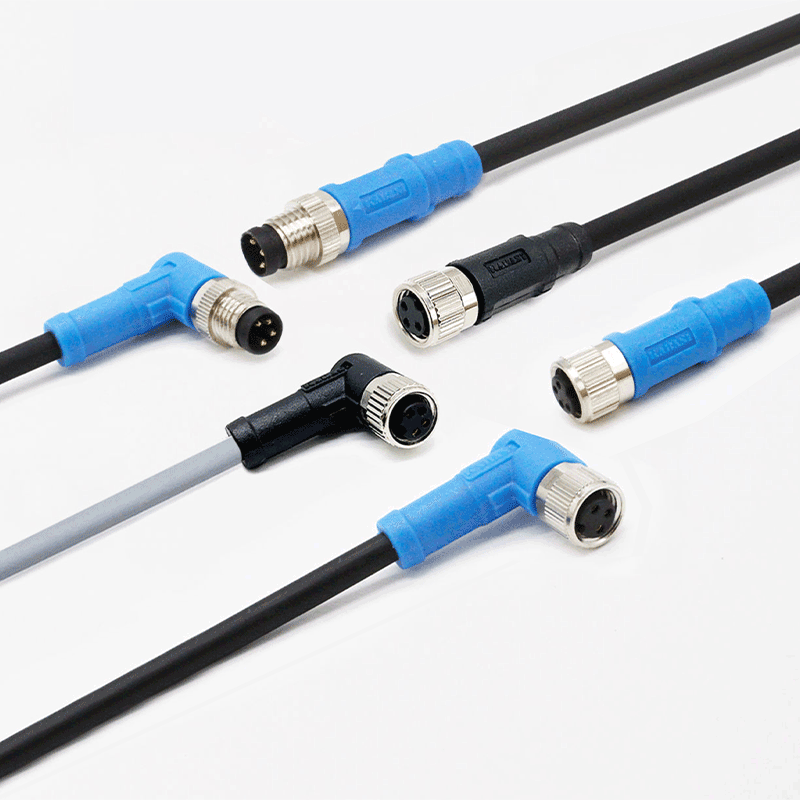
2)Post-industrial recycled (PIR) plastic is recycled from the manufacturing process. PIR plastics include flashing and other waste plastics from the manufacturing process, as well as rejected finished parts that do not meet specifications. Some connector manufacturers use 40% recycled materials for various components such as plastic housings (Figure 1). The use of PIR plastics helps sustainability in two ways; it reduces the use of virgin material and the environmental issues associated with producing that material, and it reduces waste in the manufacturing process.
Bioplastics are not necessarily biodegradable or made from renewable organic resources. They are defined in three ways:
1)Made from organic macromolecules obtained from renewable biological resources such as plants or animals, which may or may not be biodegradable
2)Made from petroleum resources, which are completely biodegradable
3)Made from a combination of organic macromolecules and petroleum resources, which may or may not be biodegradable
A bio-based polyamide 410 plastic is now available, made from at least 70% renewable material from castor beans. This material combines the performance advantages of short-chain and long-chain polyamides. Compared to traditional polyamide 66 (PA66, also known as nylon 66), this bio-based alternative has superior mechanical properties and moisture resistance while providing good aesthetics. The bio-based polyamide EcoPaXX is used in sealed and unsealed connector systems that meet the USCAR 050 standard.
The 100% bio-based high-temperature polyamide has been developed specifically for connector applications. It meets the International Sustainability and Carbon Certification (ISCC) requirements. ISCC is a globally applicable sustainability certification system that covers all sustainable raw materials, including agroforestry biomass, circular and bio-based materials, and renewable energy. This material is an ISCC+ certified mass-balanced solution that offers the same properties, performance and quality as conventional materials. Its production generates a 50% lower carbon footprint than the corresponding fossil-based plastic.
- Nanocrystalline Metal Contacts
The use of nanocrystalline nickel alloys in connectors can significantly reduce the use of gold. Mining and refining gold has a significant negative impact on the environment, which can be calculated using a Life Cycle Assessment (LCA). The LCA impact of gold is equivalent to 800 kg of CO2 mined for every troy ounce. The LCA impact of nickel is 0.4 kg CO2/troy ounce, while the LCA impact of nanocrystalline nickel alloy is 0.2 kg CO2/troy ounce. The low LCA impact of nanocrystalline nickel alloy is the result of two factors; it can be used in thinner plating to achieve the same performance level, and its manufacturing uses 100% recycled tungsten.
One connector manufacturer has replaced gold contacts on some of its product lines of high reliability connectors with nanocrystalline metal contacts. Nanostructured metal coatings are easily integrated into connector manufacturing because they are deposited via conventional interconnect electrodeposition processes. Replacing gold with nanocrystalline metal reduces the environmental impact of the materials used, equivalent to an average reduction of 7.8 million kg of CO2 emissions per year.
Nanostructured silver was developed for high-performance, high-power connectors in electric vehicle (EV) applications. EV applications include charger connectors that require low, stable contact resistance and high durability, as well as high-voltage connectors in EV powertrains and power systems that require higher temperature ratings. In terms of durability, the nanostructured silver material is approximately twice as hard as pure silver. It was tested for wear durability over 5,000 cycles on EV connectors with a 5N plugging and unplugging force, with virtually no wear at 5μm thickness. Despite being 4 times thicker, conventional silver plating processes experience deeper wear and expose the copper substrate. Key performance specifications for nanostructured silver include: 220°C operating temperature; low insertion force; improved wear resistance at a thinner cost.


