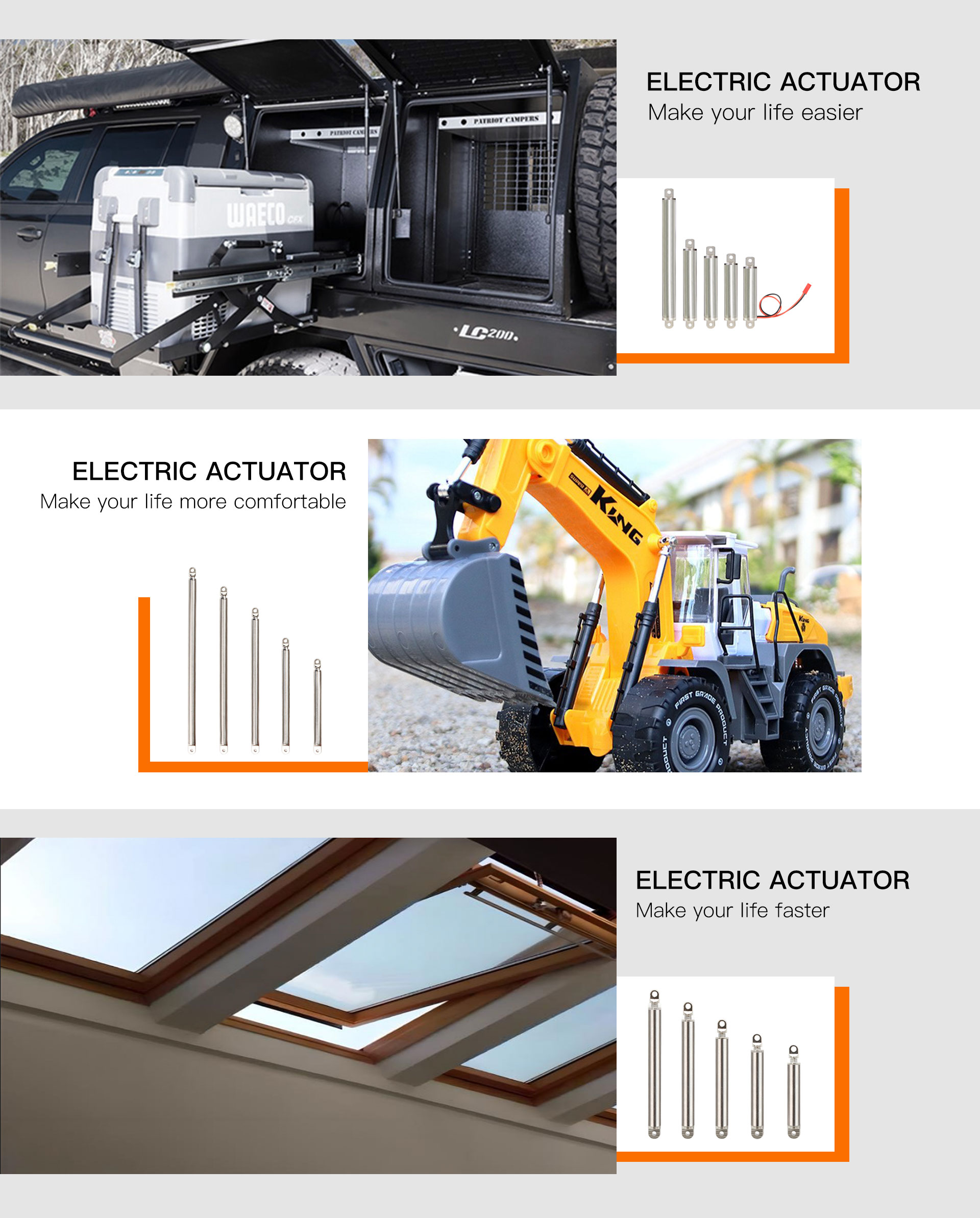
Electric linear actuators are devices that convert electrical energy into linear motion, meaning motion in a straight line, as opposed to rotational motion, which is provided by motors. Linear actuators are essential components in various automation and control systems, where they are used to move loads, position components, or adjust angles with precise control. Here’s an in-depth look at how electric linear actuators work:
Electric Motor: The core of the linear actuator is an electric motor. This motor can be either a Direct Current (DC) or Alternating Current (AC) motor, depending on the specific actuator model. The motor generates rotational energy when electrical power is supplied.
Transmission System: The motor's rotational energy is transferred to a mechanism that converts it into linear motion. This is typically done through a screw-driven mechanism. There are different types of screw mechanisms used in actuators:
Lead Screw: In a lead screw mechanism, the rotation of the screw causes a nut, attached to the actuator's output shaft, to move in a linear direction. This is one of the most common types of drive mechanisms.
Ball Screw: Similar to a lead screw, a ball screw uses ball bearings to reduce friction, making the movement smoother and more efficient, especially in high-load applications.
Feedback Mechanism: Many electric linear actuators are equipped with feedback systems that provide information about the actuator’s position. This can be achieved through potentiometers, encoders, or other sensors. These feedback mechanisms allow for precise control over the actuator's movement, which is crucial in automated systems where accurate positioning is required.
Control Systems: The actuator’s operation is usually controlled by an external control system. This system manages various parameters, such as speed, direction, and position. The controller can be programmed to move the actuator to specific positions based on feedback from sensors, enabling complex automation tasks like robotic arms, medical devices, or industrial machinery.
Motion Output: The result of these combined systems is a linear motion output that can push, pull, lift, or move objects in a straight line. The speed and force of the actuator depend on the motor’s power and the type of screw mechanism used.
Electric linear actuators are highly versatile and find applications in a wide range of industries, including manufacturing, automotive, medical devices, and robotics. Their precise motion control, reliability, and ability to handle various loads make them essential for automation.