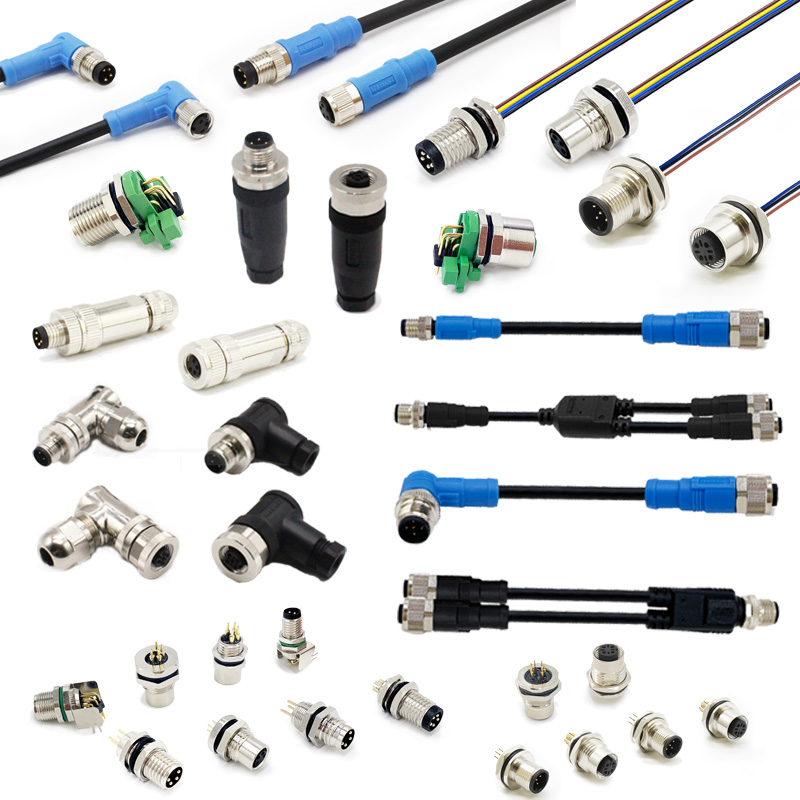
Choosing between an industrial and commercial I/O connector depends on the specific demands of your application, particularly the environmental conditions and the required reliability of the connection. Here's how you can differentiate between the two and make an informed decision:
1. Environmental Resistance: Industrial connectors are designed to withstand harsh conditions such as extreme temperatures, vibration, dust, moisture, and chemical exposure, which are common in industrial settings. They often have higher IP ratings for防水和防尘。Commercial connectors, on the other hand, are suitable for office or light commercial use where environmental conditions are less severe.
2. Physical Durability: Industrial connectors are built to be more robust, with stronger housings and latch mechanisms to endure the wear and tear of industrial applications. They typically have a higher number of mating cycles, indicating that they can be connected and disconnected more frequently without failing。
3. Performance Specifications: Industrial connectors may offer superior electrical performance, such as higher current ratings and the ability to handle more power, which is essential for heavy machinery and equipment. Commercial connectors are generally designed for lower power applications and may not meet the rigorous electrical demands of industrial settings。
4. Reliability and Safety: Industrial connectors often have additional safety features such as built-in EMI/RFI shielding to prevent interference with other devices, and they may be designed to meet specific industry standards like UL or CE certification。
5. Cost: Industrial connectors are generally more expensive due to their enhanced durability and performance capabilities. Commercial connectors are typically more cost-effective but may not offer the same level of reliability and resistance to harsh conditions.
6. Application Specificity: Consider the specific application requirements. If your application is in a controlled environment with minimal physical stress, a commercial connector may suffice. However, if the application is in a factory floor with heavy machinery, extreme temperatures, or exposure to the elements, an industrial connector is more appropriate.
7. Longevity and Maintenance: Industrial connectors are designed for long-term reliability with minimal maintenance, which is crucial for reducing downtime in industrial operations. Commercial connectors may require more frequent replacement or maintenance.
In summary, the choice between an industrial and commercial I/O connector should be based on the environmental conditions, the physical demands of the application, the required electrical performance, and the budget. It's important to consider the long-term implications of your choice, including maintenance costs and potential downtime, to ensure the reliability and efficiency of your system.