Ideally, the insertion loss should be close to 0dB, and in practical applications it is usually required to be ≤0.5dB
Insertion loss (IL) of RF connector is a key indicator to measure the quality of signal transmission. Its influence and calculation method are as follows:
Impact of Insertion Loss
Insertion loss directly affects the strength of the transmitted signal. The larger the value, the more severe the signal attenuation. The insertion loss of a normal RF connector is usually in the range of 0.1~0.5dB. Exceeding this range may indicate poor contact, material defects or assembly problems.
- Mechanical wear and performance degradation
As the number of plugging and unplugging increases, the mechanical structure of the connector (such as the contact surface) will gradually wear, resulting in an increase in the insertion loss value. This wear is usually inversely proportional to the hardness of the material (such as tin alloy wears faster than gold alloy).
- Standing wave and reflection problems
Increases in insertion loss may be accompanied by changes in standing wave (VSWR), which is manifested as increased reflection return loss. This not only affects the efficiency of signal transmission, but may also cause signal distortion or equipment damage.
Insertion loss accumulates over time, and when it reaches the design threshold (such as 500 plugging and unplugging times specified in the IEC-1000 standard), it must be scrapped. Long-term high-frequency use may cause corrosion or oxidation of the contact surface, further exacerbating the insertion loss.
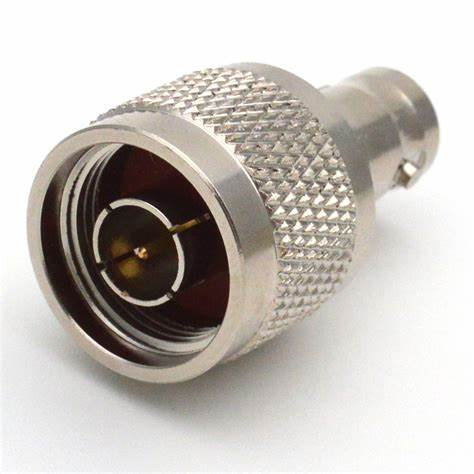
Factors Affecting Insertion Loss
- Impedance matching problem
The mismatch of input and output impedance of the connector will cause signal reflection, and the reflected power will increase the insertion loss after superposition6.
- Material and process defects
Conductor material loss (such as skin effect), plating quality, processing accuracy, etc. will affect the signal transmission efficiency6.
- Environment and use conditions
Environmental factors such as frequency changes, temperature and humidity, and mechanical wear will gradually increase insertion loss.
Calculation Method of Insertion Loss
- Insertion loss is defined as the ratio of input power to output power. Insertion loss is usually expressed in decibels (dB), which is the logarithm of the ratio of input power to output power.
The formula is: IL=10*log10(P_in/P_out)
Wherein, IL is the insertion loss, P_in is the input power, and P_out is the output power.
1) In high-power state, the input and output power must be measured separately by a power meter to avoid measurement errors of a single power meter;
2) Ideally, the insertion loss should be close to 0dB, and in practical applications it is usually required to be ≤0.5dB.
Performance in Practical Applications
- The insertion loss increases with increasing frequency, and factors such as skin effect and dielectric loss at high frequencies significantly affect the loss
- Some high-frequency connectors have insertion losses in the range of 0.1~0.5dB, and impedance must be strictly matched to ensure signal quality.

