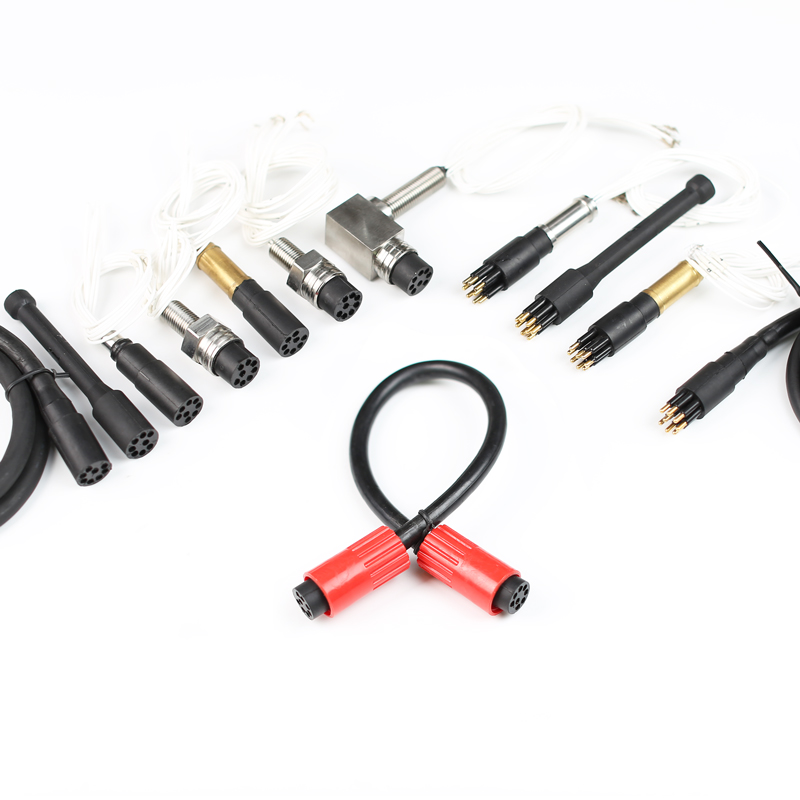
1. Balancing Strength and Weight;2. Look for advanced materials;3. Adding Nanocomposites
1. Balancing Strength and Weight
Miniaturization presents significant challenges in connector design and manufacturing material selection. Unlike large connectors, miniaturized connectors prioritize weight reduction and size reduction. Although traditional connector housing materials are inexpensive and widely used, their strength is often greatly reduced when used in thin-walled sections. Thin-walled sections can also cause high stress concentrations, increasing the risk of failure under load. Other high-strength materials (such as metals) may not be suitable replacements for these traditional engineering plastics for a variety of reasons. Factors to consider include electrical insulation requirements, form factor, impact/durability, weight, cost, and/or product manufacturability requirements.
2. Look for advanced materials
The solution lies in utilizing advanced insulation materials specifically designed for miniaturization. High-performance polymers (HPP) such as polyphthalamide (PPA), liquid crystal polymers (LCP), and other specialty polymers provide high strength and excellent dimensional stability while maintaining lightweight properties. These properties make HPP an ideal choice for applications that require miniaturized connectors, such as V2X, 5G, networking, and the Internet of Things.
3. Adding Nanocomposites
Advanced materials incorporate nanoparticles into a polymer matrix, significantly enhancing stiffness and strength while adding only a small amount of weight. Nanocomposites show great potential in achieving the robustness required for miniaturized connectors for applications such as industrial automation and artificial intelligence solutions.
By leveraging HPP and nanocomposites, materials scientists can address weight constraints and ensure strength for connectors designed for compact spaces. These materials also allow for improved thermal management in small spaces. However, with these enhancements come new challenges in balancing performance, cost, and commercial scalability.
HPP combines several factors to address the challenges of miniaturization. Its lower melt viscosity compared to traditional polymer materials allows for greater flow, enabling it to fill the complex molds required for complex miniaturized connector geometries while minimizing distortion. Unlike traditional polymers, which lose strength in thin-walled sections, HPP maintains a high strength-to-weight ratio even as size is reduced. This is achieved by incorporating innovative fillers and chemistries into the HPP matrix, resulting in high dimensional accuracy and stability.