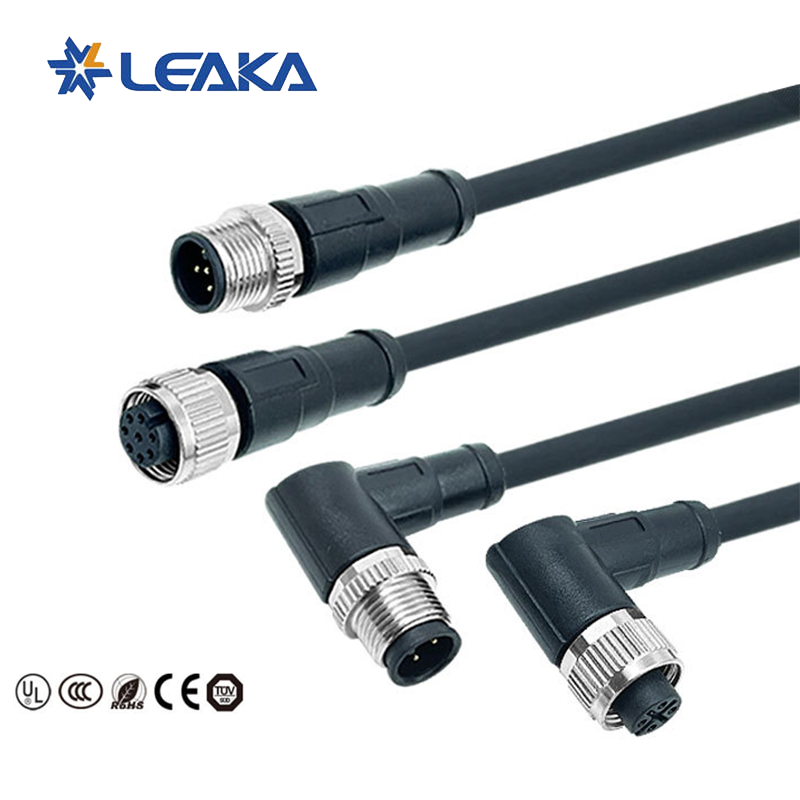
Right-angle connectors can introduce crosstalk due to the close proximity of signal paths as they change direction. Here are some layout optimization techniques to reduce crosstalk in right-angle connectors:
1. Increase Trace Spacing: One of the most effective ways to reduce crosstalk is to increase the distance between parallel traces. This reduces both capacitive and inductive coupling between the traces. However, this may not always be feasible due to space constraints on the PCB.
2. Minimize Parallel Run Lengths: Reducing the length of parallel running traces can significantly lower crosstalk, especially if the traces run parallel for a long distance.
3. Use Ground Planes and Guard Traces: Introducing a ground plane or a guard trace between signal traces can provide a low-impedance return path for the signals and help to mitigate crosstalk. The ground plane or guard trace can also act as a shield, reducing the electromagnetic field that could couple with adjacent traces.
4. Optimize Stack-Up: In the PCB stack-up, placing sensitive signals in a layer with a reference plane on both sides can help to reduce crosstalk. This stripline configuration minimizes the interaction with adjacent layers.
5. Use Differential Pairing: Differential signaling can help to reduce crosstalk by canceling out the effects of noise in the return path. When two signals are transmitted simultaneously with opposite polarity, the noise induced by crosstalk tends to cancel out, resulting in a cleaner signal.
6. Control Signal Skew: Minimizing skew between signals can help to reduce crosstalk, as the signals switch at the same time and the crosstalk interference is minimized.
7. Use Shielding: Shielding the connector or the area around the connector can help to reduce the radiated emissions that cause crosstalk. This can be achieved with a metal shield or a proper layout of ground structures around the connector.
8. End-to-End Planning: Plan the entire signal path from the source to the destination, considering not just the connector but also the traces on the PCB. This holistic approach can help to identify and mitigate potential crosstalk issues early in the design process.
9. Advanced Simulation and Modeling: Use advanced simulation tools to model the signal integrity and crosstalk in the design. These tools can help to predict where crosstalk might be a problem and suggest layout changes to mitigate it.
10. Follow Best Practices: Adhere to best practices for high-speed digital PCB design, such as those outlined in industry standards and guidelines. These best practices can provide specific recommendations for layout, layer assignment, and trace routing to minimize crosstalk.
By implementing these strategies, you can significantly reduce crosstalk in right-angle connectors and ensure reliable signal transmission in high-speed applications.