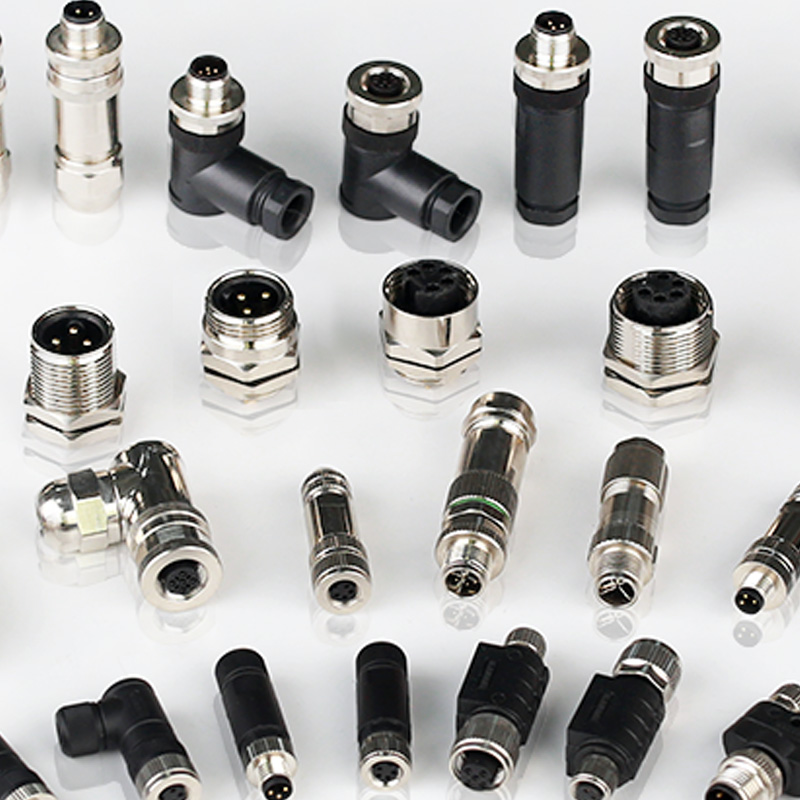
Keyed connectors offer several benefits that improve both the safety and reliability of electrical, electronic, and mechanical systems. Here’s a detailed look at the advantages:
1. Prevent Incorrect Connections
Keyed connectors are designed with unique shapes, grooves, or pins that allow them to fit together in only one orientation. This ensures that users cannot mistakenly connect incompatible parts or reverse the polarity of electrical connections. This reduces the risk of short circuits, device damage, or system failures.
2. Improved Safety
By preventing incorrect connections, keyed connectors significantly enhance safety in applications where proper wiring and connection orientation are critical. This is especially important in high-voltage or sensitive systems, where incorrect connections can lead to accidents, electrical fires, or equipment malfunctions.
3. Faster Assembly and Maintenance
Keyed connectors simplify the process of assembling and maintaining complex systems. Since the connectors only fit one way, there’s no need to spend time checking or double-checking orientations during installation or repairs. This leads to quicker, error-free setups, which is particularly useful in mass production or field service environments.
4. Enhanced Reliability
In environments where vibration, movement, or mechanical stress is common (such as automotive, aerospace, or industrial applications), keyed connectors help maintain a secure and stable connection. The keyed design reduces the likelihood of connectors working loose or being accidentally disconnected, ensuring long-term system reliability.
5. Reduced Risk of Damage
Since keyed connectors ensure proper alignment, they help avoid the accidental bending, breaking, or shorting of pins or contacts during installation. This reduces the risk of damage to both the connector and the devices being connected, extending the lifespan of components and minimizing repair costs.
6. Compatibility with Specific Systems
Keyed connectors can be designed for specific systems or components, ensuring that only the correct equipment can be connected. This is especially useful in modular systems or applications with multiple connectors, where using the wrong connector could cause serious issues.
7. Ease of Use for Non-Experts
For less experienced technicians or users, keyed connectors make the connection process more intuitive. There’s no need for specialized knowledge to know which connector goes where, reducing the chance of user error, especially in consumer electronics or DIY settings.
8. Support for Complex Systems
In systems with multiple connections that need to be assembled quickly and correctly, keyed connectors help keep everything organized and correctly aligned. For example, in automotive and aerospace wiring, there may be multiple connectors in close proximity, and keyed designs help distinguish between similar-looking connections.
9. Enhanced Durability
Keyed connectors are often designed with rugged housings that protect the pins and contacts, making them more durable for use in harsh environments. The keyed aspect adds an extra layer of mechanical support, ensuring that the connectors remain properly aligned and functional even under physical stress.
Summary
keyed connectors are valuable for their ability to prevent incorrect connections, improve safety, speed up assembly, and increase reliability in various electrical, electronic, and mechanical applications. They are particularly beneficial in environments where safety and precision are essential.