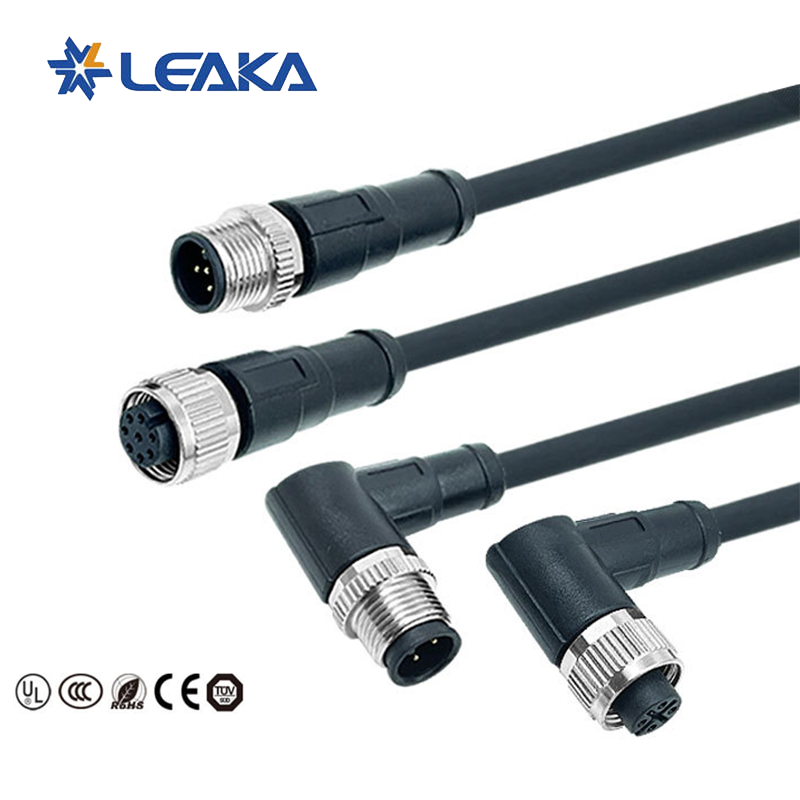
Right-angle connectors can introduce several potential drawbacks for signal integrity:
1. Signal Skew: Right-angle connectors can cause skew due to the physical difference in length between the inner and outer signals. This imbalance can lead to increased radiated emissions and affect the timing of differential signals, which is crucial for high-speed data transmission. To minimize skew, it's important to orient differential signals within the connector to maintain balance .
2. Impedance Mismatch: The impedance of the connector should match the characteristic impedance of the transmission line to prevent signal reflections. Right-angle connectors may introduce impedance discontinuities due to the change in direction, which can degrade signal integrity. Ensuring that the connector's impedance is controlled and matches the PCB trace impedance is key to minimizing reflections .
3. Crosstalk: In high-density connectors, the proximity of signals can lead to crosstalk. While differential signaling inherently offers some immunity to crosstalk, the physical layout of the connector can influence the level of crosstalk. Right-angle connectors may have a higher crosstalk due to the increased complexity of the signal path .
4. EMI Susceptibility: Right-angle connectors may also be more susceptible to electromagnetic interference (EMI) due to the change in direction of the signal path, which can cause changes in the electromagnetic field distribution. This can be mitigated by using shielded connectors and proper PCB layout techniques to reduce EMI .
5. Insertion Loss: The physical structure of right-angle connectors can lead to higher insertion loss compared to straight connectors. This is due to the increased complexity of the signal path and potential discontinuities in the transmission line. Insertion loss can degrade the signal quality, especially at higher frequencies .
6. Transmission Line Effects: At high speeds, signals can exhibit transmission line effects such as reflections, which can be more pronounced in right-angle connectors due to the geometric changes in the signal path. These effects can lead to signal distortion and must be managed through proper design and simulation .
To address these issues, it's important to use high-quality connectors with controlled impedance, proper shielding, and tight tolerances on the geometric dimensions. Additionally, rigorous testing and simulation using tools like S parameter analysis can help identify and mitigate potential signal integrity problems in connectors .