Deep sea watertight connectors are the most effective way to realize the functions of power distribution, signal transmission, communication and exchange between equipment systems in deep sea environments.
Waters with a depth of less than 200m are called deep sea by scientists. With the continuous development of science and technology, more and more equipment is used in the deep sea. While realizing the above functions, watertight connectors must also withstand the environmental influences of high pressure, corrosion, low temperature and other external seawater, and even need to stay in the deep sea environment for a long time, which also brings challenges to the material selection and structural design of deep sea watertight connectors. Existing deep sea watertight connectors are mainly in the form of rubber overall molding, rubber or epoxy resin and metal bonding, etc. Based on different application scenarios, the types of deep sea watertight connectors are also constantly expanding.
1. Shipborne survey equipment
Shipborne fixed survey equipment, such as shipborne multi-beam detection, side-scan sonar detection, shallow profile detection, etc., although a large number of watertight connectors are used, the shallow water depth is not the application scope of deep sea watertight connectors.
As some shipborne survey equipment for shipborne sampling and near-bottom operations, its deep-sea watertight connectors are widely used. Shipborne deep-sea towed bodies, warm-salinity deep-sea detection, seawater sampling systems, geological sampling systems, and visual sampling systems and other types of shipborne equipment require watertight connectors to achieve power distribution and signal transmission in deep-sea environments. Combined with the usage, the watertight connectors of such shipborne equipment are mainly armored cables, fiber cables, optoelectronic composite cables, umbilical cables and other watertight cables, and different forms of watertight sockets are used to achieve reliable underwater connections.
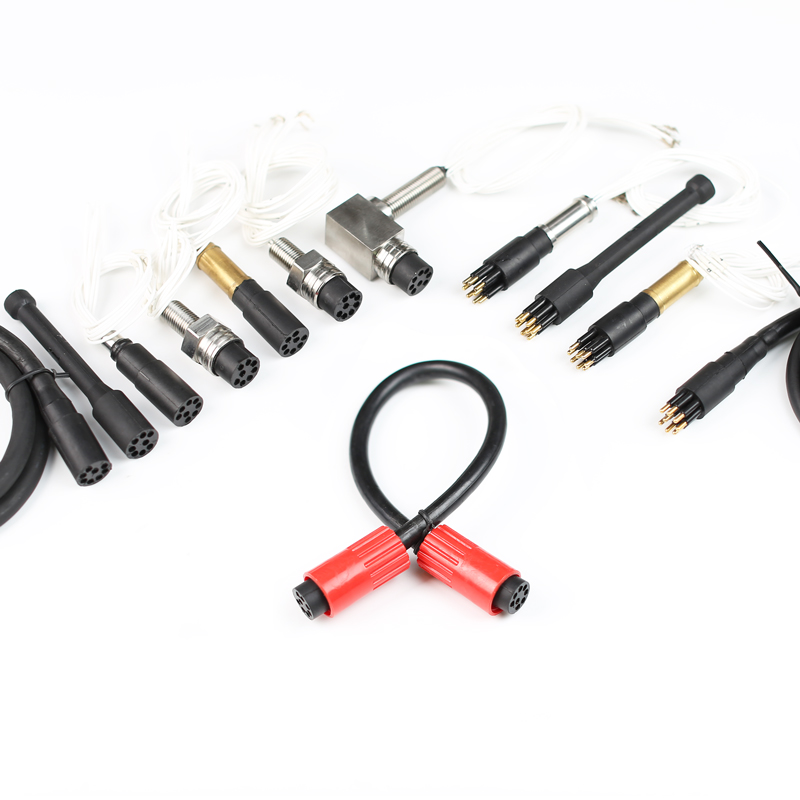 2. Underwater transport equipment
With the development of deep-sea science and technology, underwater transport equipment is increasingly used in the deep sea, and it has also become the epitome of watertight connector applications. Deep-sea watertight connectors are widely used in manned submersibles (HOV), remotely operated submersibles (ROV), autonomous submersibles (AUV), and various new types of underwater transport equipment. According to the actual needs of underwater transport equipment, watertight connectors have also derived many types to meet the different operational needs of underwater transport equipment.
3. Underwater in-situ fixed equipment
Underwater in-situ fixed equipment watertight connectors are also widely used in various types of underwater in-situ fixed equipment, deep-sea buoy systems, deep-sea automatic observation stations, deep-sea in-situ detection systems, and deep-sea equipment such as offshore oil and gas resource exploitation and underwater transmission systems have good applications.
In Addition
Underwater connectors can be widely used in marine scientific research, oil drilling, environmental monitoring, marine military industry, marine fishing and other fields.


