The difference between heavy-duty connectors and circular connectors: definition and application areas, structural features, connection method, protection performance, type classification.
The difference between heavy-duty connectors and circular connectors is as follows:
1. Definition and application areas:
1) Heavy-duty connectors are widely used in equipment that requires electrical and signal connections, such as construction machinery, textile machinery, packaging and printing machinery, tobacco machinery, robots, rail transportation, hot runners, electricity, automation, etc.
2) The basic structure of a circular connector is a cylindrical connector with a circular mating surface. It is used for interconnection between equipment and is used in many fields such as industrial automation, military equipment, energy and energy fields, aerospace, etc.
2. Structural features:
1) The structural design of heavy-duty connectors is diverse, such as having a sturdy and durable shell, a variety of plug series, different wiring methods, etc. Some heavy-duty connectors also have high protection levels, high integration connections, and rich combinations.
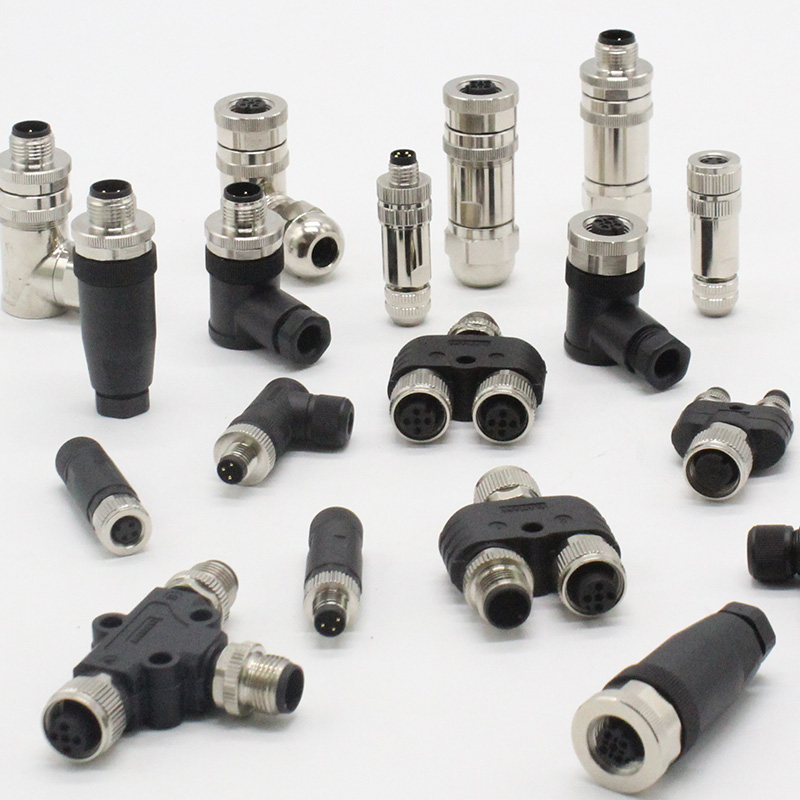
2) The basic structure of a circular connector includes contacts, insulators, shells, etc. Its cylindrical structure has natural firmness. Most plugs and sockets are threaded. The number of terminals can range from two to hundreds, and it has the characteristics of small size and high reliability.
 3. Connection method:
1) Common connection methods for heavy-duty connectors include threaded connection, plug-in connection, cabinet connection, port connection, etc.
2) Common connection methods for circular connectors include threaded connection, plug-in connection, bayonet connection, door lock connector, quick plug-in connector, etc.
4. Protection performance:
1) Heavy-duty connectors usually provide high protection levels, such as IP65+, IP68, etc., and can provide effective protection in harsh environments such as sand, dust, rain, cold, ice, snow, oil, etc.
2) Some circular connectors also have good protection performance, such as waterproof and dustproof, etc.
5. Type classification:
1) Heavy-duty connectors can be classified according to operating frequency (low frequency and high frequency) and appearance structure (rectangular, etc.).
2) Circular connectors can be classified according to connection method (such as thread, quick-insert, bayonet, etc.), structure (straight-in, lead-type, with junction box, etc.), environmental conditions (waterproof, high temperature resistance, low temperature resistance, etc.), protection level (IP67, IP68, MIL, etc.) and purpose (power supply, signal, data, optoelectronics, etc.).


