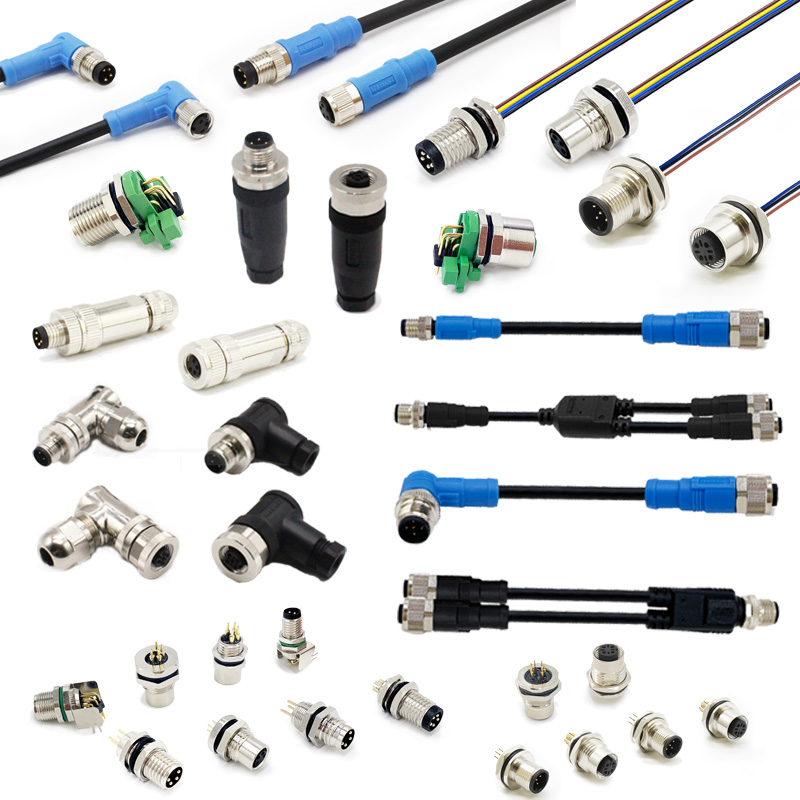
IP68 waterproof connectors usually use high-quality materials and manufacturing processes, and have the characteristics of high temperature resistance, corrosion resistance, shock resistance, and oxidation resistance. Its internal structure usually uses sealing gaskets, sealing rings and other structures to ensure that the contact part between the plug and the socket has good waterproof performance. When in use, you only need to insert and tighten the plug and socket, and the contact part of the connector can be effectively protected, thereby achieving stable power and signal transmission.

IP67 Connectors: The "6" in the IP67 rating indicates that the connector is completely dust-tight. This means the device is fully protected against the intrusion of dust particles, ensuring that no dust can enter and compromise the performance of the electronic components inside. The "7" in the rating refers to the device’s protection against water. Specifically, an IP67-rated connector can withstand immersion in water up to a depth of 1 meter (approximately 3.3 feet) for 30 minutes. IP67 connectors are ideal for environments where the connector may be exposed to dust and occasional submersion in water, such as outdoor electrical systems, automotive connections, or marine environments where temporary water exposure is a risk.
IP68 Connectors: Similar to IP67, IP68 connectors are completely dust-tight, providing full protection from dust particles. However, the key difference is in their water resistance. The "8" in IP68 indicates that the connector is designed to withstand more severe conditions than those covered under IP67. IP68 connectors can endure continuous immersion in water, usually deeper than 1 meter. The exact depth and duration of immersion vary by manufacturer but generally involve much more rigorous conditions, making these connectors suitable for underwater or heavy-duty applications, such as offshore installations, underwater lighting, or devices that are exposed to continuous moisture.
While both IP67 and IP68 connectors offer strong protection against dust and water, IP68 connectors provide a higher degree of water resistance, making them suitable for long-term immersion and more extreme conditions. The choice between IP67 and IP68 depends on the specific environmental requirements of your application.