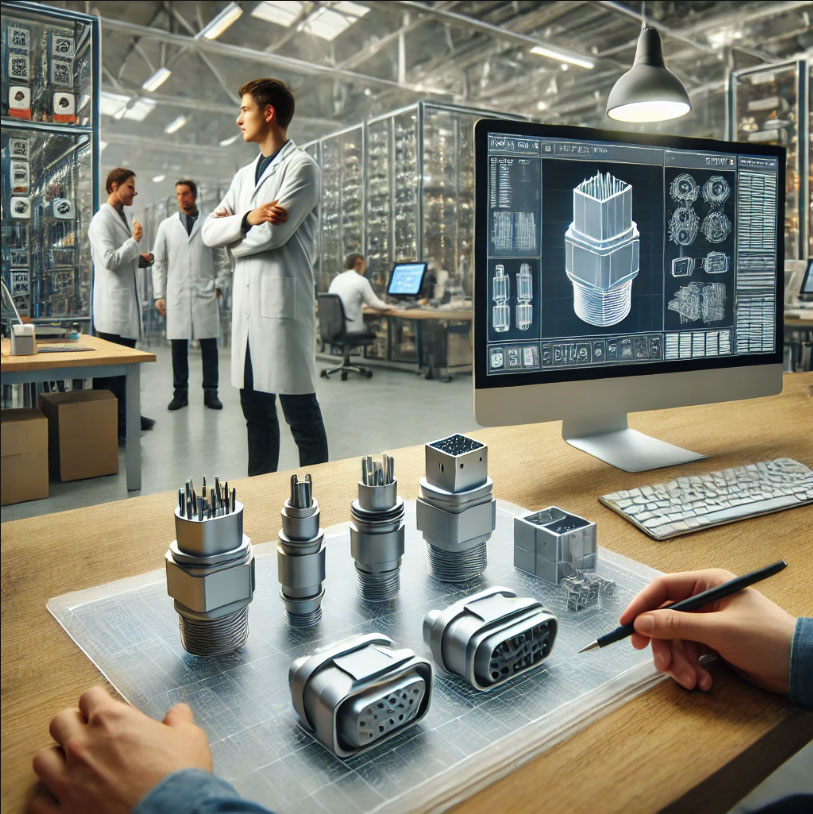
One of the primary challenges in miniaturization is fitting all the necessary components into a much smaller space. Connectors must evolve to be smaller and more compact while still performing the same functions as their larger counterparts. This involves designing connectors with fewer components, thinner walls, and denser pin configurations. For instance, micro-USB and USB-C connectors have become standard in mobile devices due to their small size and ability to handle both power and data transmission.
The ability to stack or arrange connectors in compact spaces without compromising on performance is also critical. For example, connectors used in smartphones, wearables, and medical devices must be small enough to fit within the device's sleek profile, yet still robust enough to handle data transfer, charging, or power management tasks.
One of the challenges of miniaturizing connectors is ensuring that signal integrity is not compromised. Smaller connectors have shorter distances between pins, which increases the risk of crosstalk and interference between signals. To mitigate these issues, modern miniaturized connectors often incorporate shielding, twisted pair wiring, or other signal isolation techniques to maintain high-quality data transmission even in small form factors.
In high-speed data applications, such as in smartphones, laptops, or industrial sensors, even minor signal loss or degradation can result in poor performance. Miniaturized connectors are designed to handle these high data rates while minimizing signal attenuation, ensuring reliable performance.
As devices become smaller, they are also required to operate more efficiently, particularly in terms of power consumption. Miniaturized connectors must be capable of transmitting power efficiently without generating excess heat, which can be a challenge in compact spaces. For example, USB-C connectors are designed to handle up to 100W of power while maintaining a small form factor, making them ideal for use in ultra-thin laptops and tablets.
Battery-powered devices, such as wearables and medical implants, require connectors that are both small and energy-efficient. These connectors must ensure a stable power connection without wasting energy, extending the battery life of the device.
Miniaturized connectors face additional challenges when it comes to durability. Because these connectors are smaller, they are more susceptible to wear and tear, particularly in applications that require frequent plugging and unplugging, such as charging connectors or audio jacks. Manufacturers use advanced materials, such as gold-plated contacts and rugged housing, to enhance the durability of miniaturized connectors.
In applications such as medical devices or aerospace, reliability is critical. Connectors must perform consistently under harsh conditions, including exposure to moisture, vibration, and temperature extremes, without losing functionality. Miniaturized connectors are often tested rigorously to ensure that they can withstand these conditions without compromising performance.
In the medical field, the trend towards miniaturization is driving the development of smaller, more portable devices that can be used in clinical or home settings. Miniaturized connectors play a vital role in making these devices possible by providing compact, reliable connections for sensors, power sources, and communication modules.
Wearable devices, such as fitness trackers and smartwatches, also rely on miniaturized connectors to maintain their sleek, lightweight designs. These connectors need to be small enough to fit within the compact housing of the device while still providing reliable connective sensors, charging, and data transfer.
As new technologies such as 5G, oT, and artificial intelligence continue to evolve, the demand for miniaturized connectors will grow. These technologies require fast, reliable connections in increasingly smaller devices. For example, 5G smartphones and IT sensors need connectors that can handle high data rates and power requirements without taking up valuable space within the device.
The trend towards miniaturization is also driving innovation in connector design, with manufacturers developing new materials and manufacturing techniques to create even smaller, more efficient connectors.
In conclusion, connectors play a vital role in the miniaturization of electronic devices by enabling the efficient transmission of power and data in smaller, more compact spaces. As devices continue to shrink, connectors must evolve to meet the demands of these emerging technologies, ensuring that they maintain performance, reliability, and durability even in the smallest form factors.