High-performance vehicle technologies require new electrical design strategies and advanced connectors to meet new challenges. As the transportation industry integrates high-performance vehicle technologies into all types of vehicles and transitions to electric vehicles, traditional distributed electrical system architectures are reaching their limits. The complexity and high speed required by technologies such as advanced infotainment, safety systems, autonomous driving, and vehicle-to-infrastructure communications networks require new design strategies and new connectors to address these challenges.
- Vehicle electrical systems: decentralization, domain and regional architecture
Traditional decentralized vehicle architectures consist of up to 100 control units, each assigned a defined function, such as controlling the engine control unit (ECU), airbags, ABS/ESP, seat adjustment systems or climate control. wait. The control unit communicates with other control units via gateways. As vehicle functionality is added or improved, a control unit is added for each new function. All vehicle types, from vans to buses and beyond, have undergone dramatic changes in recent years, with enhanced functionality significantly increasing the cabling and interconnection solutions required for each vehicle.
The control units in the architecture are divided into different functional areas. Each functional module is responsible for controlling a specific area of the vehicle, such as the powertrain, infotainment system or safety functions. A standalone high-performance computer (HPC) performs master control of the domain and coordinates the control units within its domain. For example, the control unit oversees driver assistance systems, ABS/ESP and steering systems. Domain architecture reduces the number of control units, reducing the required wiring and installation efforts compared to traditional decentralized architecture, effectively reducing weight and cost. Additional functionality can be easily integrated into upgrades or new designs.
In a zone architecture, structuring is not based on large scope, but on the zones of the system itself. For example, several functions are integrated into one area within the vehicle. Functions such as powertrain and infotainment can be combined and processed in one zone controller. The central HPC performs master control of the various regional units, reducing the number of control units and the consequent number of lines by 50%.

- High reliability and performance requirements
HPC and its corresponding interconnect solutions must meet the highest performance requirements. For example, processing imaging and sensor data in safety systems for autonomous driving requires secure high-speed data transmission rates and short latency transmission times. At the same time, connector signal transmission cannot fail under any circumstances. Connectors in these systems require high performance, fast requirements, and most importantly, reliable data transmission, even in sometimes adverse environmental conditions.
High-speed connector signal transmissions require special protection because they are particularly susceptible to electromagnetic waves. In this case, the connector can act as both a source of interference and a receiver. Shielding will protect sensitive connector signal transmissions from external influences.
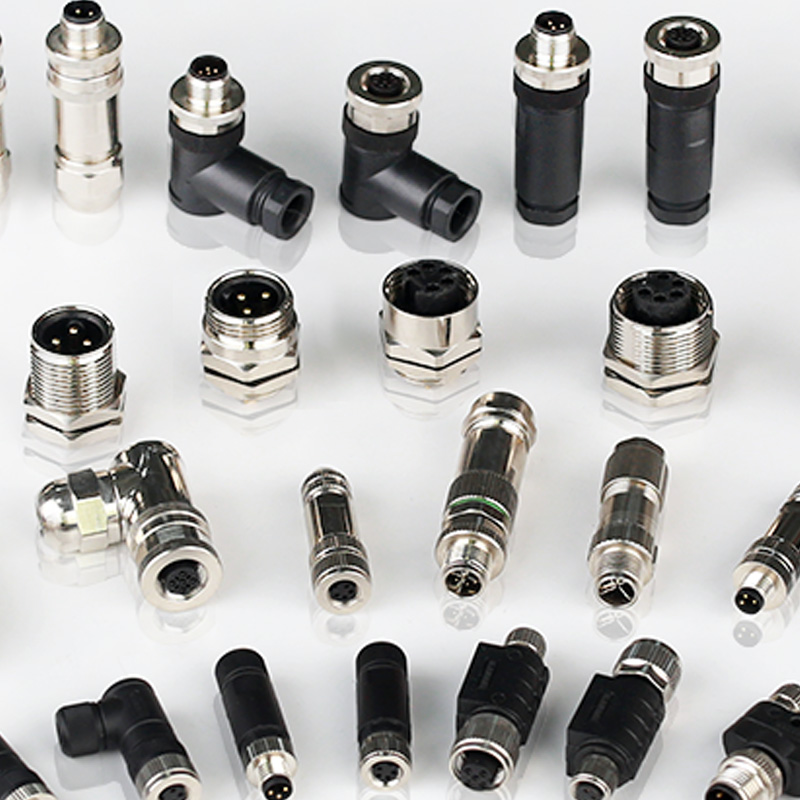
- Reliability of connector design for harsh environments
Traditional connectors are connected by mating a male connector and a female connector. However, in the event of a strong impact, the male connector may detach from the female connector. To prevent this connector contact interruption, a double-sided female connector can be used to provide redundancy, thereby improving connector contact reliability.
The "neutral" connector is even more robust. The special feature here is the identical contact geometry. Therefore, both have a female connector and a male connector contact method. Each pin is therefore contacted by two female connector contacts, the plug and socket are interlocked and cannot fall out of each other. Under mechanical load, the double-sided female connector always ensures that at least one connector contact point is in place, while the interlocking geometry in the neutral contact system ensures that the connector signal transmission always runs via two contact points. This high level of redundancy results in maximum connector contact reliability.


