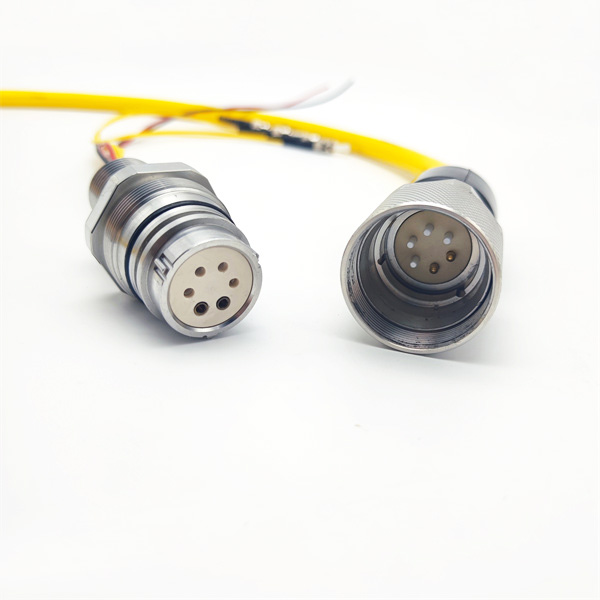
- Definition of Fiber Optic Connector
A fiber optic connector is a mechanical device that connects two fiber optic cables, providing a means of transmitting data between them. Fiber optic connectors are used in a variety of applications, including telecommunications, data centers, and industrial settings.
- Why are fiber optic connectors important in fiber optic communications?
Fiber optic communications have become increasingly important in today's digital world, providing a faster and more reliable way to transmit data than traditional copper-based communication systems. Fiber optic connectors play a key role in ensuring that fiber optic systems operate efficiently and reliably, as they can connect and disconnect fiber optic cables without damaging the delicate fibers.
- How do fiber optic connectors work?
Fiber optic connectors align the ends of two fiber optic cables and secure them together using a series of mechanical components. The most important feature of a fiber optic connector is its precision ceramic ferrule, which ensures that the fibers are aligned with each other, allowing light to be transmitted through the fiber. This precise alignment is critical to the performance of a fiber optic system, as misalignment or contamination of the connector can cause significant signal loss and compromise system performance.
- Common Materials for Fiber Optic Connectors
Fiber optic connectors are typically made of high-quality materials that provide excellent durability and performance. The most common materials used for fiber optic connectors include ceramic, metal, and plastic. Ceramic is the most common material for the ferrule, providing the best precision and reliability. In contrast, the connector body is made of metal such as stainless steel to provide strength and durability.
- Advantages of Using Fiber Optic Connectors
One of the most notable advantages of using fiber optic connectors is their ability to provide a reliable and efficient means of transmitting high-speed data over long distances. This is especially important in telecommunications and data center applications, where fast and reliable data transmission is essential. In addition, fiber optic connectors are easy to install and maintain, making them ideal for a wide range of industrial applications. They also offer high-bandwidth capabilities, with greater data transmission capacity than traditional copper-based systems.
- Real-World Examples of Fiber Optic Connector Applications
Fiber optic connectors are used in a variety of industries and applications, including telecommunications, data centers, medical devices, and industrial automation. In the telecommunications industry, fiber optic connectors connect optical cables between network nodes, enabling efficient and reliable data transmission over long distances. In data centers, fiber optic connectors connect servers and storage devices, providing a fast and reliable means of data transmission. In the medical industry, fiber optic connectors are used in endoscopy and other imaging applications, providing high-quality images for diagnosis and treatment. In industrial automation, fiber optic connectors are used for remote monitoring and control, providing real-time data feedback to improve efficiency and productivity.
- Tips for Proper Selection, Installation, and Maintenance of Fiber Optic Connectors
When selecting fiber optic connectors, it is critical to select high-quality products that are compatible with the specific application and type of fiber being used. Proper installation is also critical, as improper installation can cause connector misalignment or contamination, resulting in signal loss. Regular maintenance is also necessary because fiber optic connectors can become contaminated over time, causing performance degradation or failure. To maintain optimal performance, it is critical to regularly clean fiber optic connectors and replace any damaged or worn components as needed.