Fiber optic connectors are essential components in modern communication and data transmission systems. They provide a secure, low-loss interface for optical fibers, enabling high-speed and high-capacity communication across various industries. Here are some of the key applications of fiber optic connectors:
1. Telecommunications and Internet Infrastructure
Fiber optic connectors play a vital role in telecommunications by facilitating the connection between optical fibers in large-scale network infrastructures. They are commonly used in:
- Long-Distance Communication: Fiber optic cables, connected by these connectors, are used to transmit data over long distances with minimal signal loss, making them ideal for undersea cables and intercontinental networks.
- High-Speed Internet: Modern broadband services rely heavily on fiber optics to deliver gigabit-speed internet to homes and businesses.
Popular connectors like LC, SC, and MPO are widely used in this field due to their high performance and ability to handle dense connections.
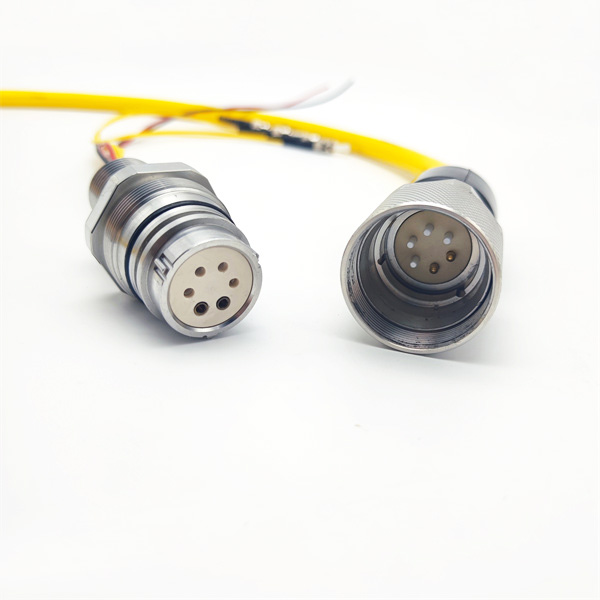
2. Data Centers
Data centers demand high-capacity, low-latency data transmission, and fiber optic connectors are crucial for achieving this. They connect high-density patch panels, servers, and switches, allowing seamless communication between hardware components.
- High-Density Connections: MPO/MTP connectors are often employed for their ability to support multiple fiber strands, maximizing space efficiency.
- Scalability: Fiber connectors make it easy to upgrade data center infrastructure as demand grows, supporting technologies like 400G and beyond.
3. Military and Aerospace
In military and aerospace applications, fiber optic connectors are valued for their reliability, durability, and immunity to electromagnetic interference (EMI). They are used in:
- Avionics Systems: Connecting sensors, navigation systems, and communication devices in aircraft.
- Defense Communication: Providing secure, high-speed communication channels in military vehicles and command centers.
Specialized connectors, such as MIL-DTL-38999, are designed to meet stringent standards for rugged environments.
4. Medical Devices
Fiber optic connectors are used in various medical devices and diagnostic systems to ensure precise and reliable performance. Applications include:
- Endoscopy: Delivering high-quality images from inside the body using fiber optic cables connected through specialized connectors.
- Surgical Lasers: Providing precise laser delivery systems for minimally invasive surgeries.
- Patient Monitoring Systems: Enabling real-time, high-bandwidth data transmission for advanced diagnostic tools.
5. Industrial Automation
In industrial settings, fiber optic connectors support the growing need for high-speed data transfer in manufacturing and automation systems. They are used in:
- Robotics: Connecting sensors and control units in automated machinery.
- Process Monitoring: Transmitting data from sensors in real-time, even in harsh environments.
- Factory Networks: Supporting Industrial Ethernet protocols with reliable and high-speed connections.
6. Broadcasting and Entertainment
Fiber optic connectors are widely used in the broadcasting industry to deliver high-quality audio and video signals over long distances. Applications include:
- Live Event Coverage: Connecting cameras, audio mixers, and other equipment for seamless transmission.
- Streaming Services: Facilitating high-definition content delivery for on-demand streaming platforms.
7. Smart Cities and IoT
As smart cities and IoT (Internet of Things) systems expand, fiber optic connectors enable the infrastructure required for these technologies by:
- Connecting Smart Sensors: Providing high-speed, reliable communication between devices like traffic lights, surveillance cameras, and environmental monitors.
- Enhancing Connectivity: Supporting the backbone of urban communication networks for efficient data management and real-time responses.
Conclusion
Fiber optic connectors are indispensable in applications ranging from telecommunications to medical devices and industrial automation. Their ability to deliver reliable, high-speed, and low-loss data transmission has made them a cornerstone of modern technology, driving advancements in various industries and supporting the infrastructure of the digital age.


