Compare the performance, operation specifications and quality inspection methods of different wire harness fixing products
Performance Comparison of Different Products
| Material type |
Temperature range |
Mechanical strength |
Application |
| PA66 nylon cable ties |
-40℃~120℃ |
Tensile strength ≥200N |
Automotive wiring harness/ Low-voltage wiring harness |
| LCP flame-retardant cable ties |
-40℃~180℃ |
Tensile strength ≥300N |
Engine compartment/ High-voltage wiring harness |
| Metal buckles (stainless steel) |
-40℃~250℃ |
Shear force ≥500N |
High temperature area (near the exhaust pipe) |
| Glass fiber tape |
≤200℃ |
Tensile strength ≥50N |
High temperature areas of automobiles |
| PVC corrugated tube |
/ |
Oil, acid and alkali resistant;
Wall thickness ≥0.8mm |
Chassis wiring harness of automobiles |
Double-layer flame-retardant corrugated tube
(Outer layer PA6, inner layer aluminum box) |
/ |
Voltage ≥1500V |
High-voltage wiring harness |
1) The engine compartment wiring harness needs to use LCP cable ties with a temperature resistance of ≥150℃ (such as Tesla Model Y solution).
2) The chassis wiring harness needs a combination of waterproof corrugated tube (IP67) + nylon cable ties, which reduces costs by 15%.
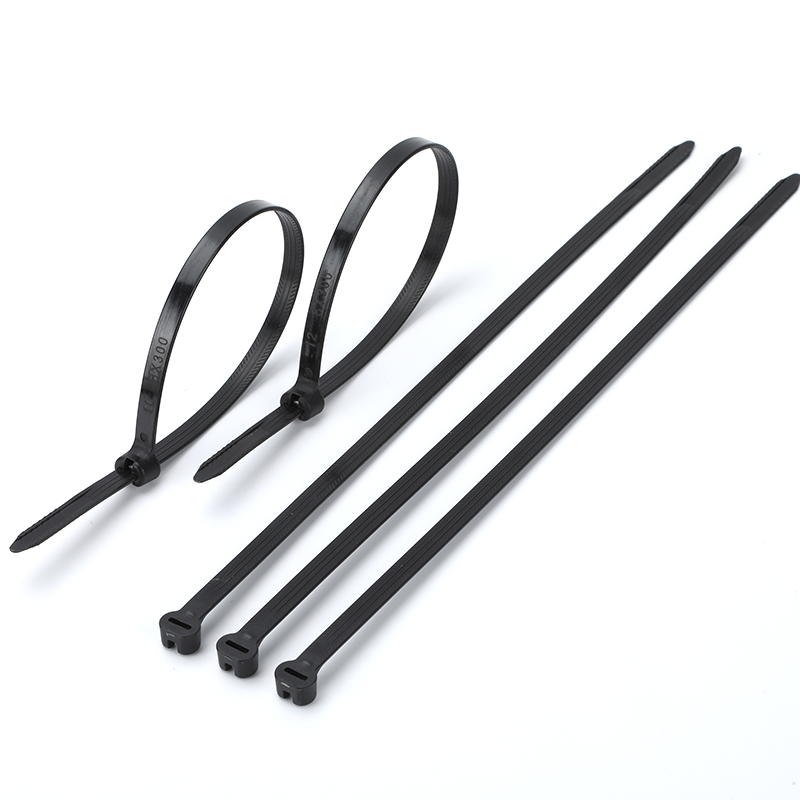
How to Secure the Wiring Harness1. How to lay out the fixing points and their spacing
General standards:
| Wire harness type |
Fixed point spacing |
Distance from moving parts |
Distance from heat source |
| Low-voltage body harness |
≤400mm |
≥30mm |
≥100mm |
| High-voltage power harness |
≤300mm |
≥50mm |
≥200mm |
| Chassis harness |
≤350mm |
≥20mm |
≥150mm |
1) The battery pack harness needs additional fixing points (spacing ≤250mm) to prevent the terminals from loosening due to vibration.
2) A rubber sheath (Shore hardness 50±5) needs to be installed at the harness through-holes, and a sealant (Henkel Tyroson 4910) needs to be applied.
2. Cable tie operation specifications
The length of the cable tie end is ≤3mm, and the inclination angle is ≤15° to avoid sharp angles scratching the insulation layer of the harness
1) Low-voltage harness locking force 20N-40N (verified by a digital torque wrench)
2) High-voltage harness locking force 50N-80N, requiring secondary confirmation (visual inspection to ensure that the lock is fully closed).
Quality Inspection Standards
1. Mechanical performance test
1) Frequency range 10-2000Hz, acceleration 30m/s², continuous 50 hours (in compliance with GMW3172 standard)
2) Wire harness displacement ≤2mm, contact resistance fluctuation ≤1mΩ.
- Plug-in force verification:
1) Low voltage terminal insertion force ≤50N, retention force ≥40N (QC/T 1067).
2) High voltage terminal insertion force ≤80N, retention force ≥100N (LV214).
2. Environmental adaptability test
| Test items |
Test requirements |
Test results |
| High temperature aging |
150℃/1000h |
Tie tensile strength reduction ≤10%6 |
| Salt spray corrosion |
Neutral salt spray 96h |
Metal parts have no red rust, coating shedding ≤5%6 |
| Temperature and humidity cycle |
-40℃~125℃ cycle 500 times |
Wire harness insulation resistance ≥100MΩ (DC500V) |
3. Online detection technology
- AI visual detection:
Use 3D camera (such as Keyence CV-X series) to detect cable tie spacing (accuracy +0.5mm) and lock integrity.
Force sensor monitoring: Real-time monitoring of assembly pressure (minimum value setting ±5N) to intercept unqualified locking force products.
Common Errors and Innovative Solutions
1. Common errors
Insufficient heat resistance of the material or overload of the lock → Solution: Infrared thermal imager is needed to monitor the high temperature points.
- Wire harness wear:
The fixed point spacing is too large, resulting in friction with the car body → Solution: Optimize to 250mm spacing + wear-resistant rubber sleeve.
2. Process innovation direction
Carbon fiber composite cable ties (30% weight reduction, tensile strength 2400N), used for high-end new energy vehicles.
Robot cable tie installation system (beat ≤5 seconds/point), positioning accuracy +0.1mm (applied in Tesla Shanghai factory).


