Connectors used in automotive and aerospace applications are designed to endure extreme conditions, including high temperatures, vibrations, dust, moisture, and even radiation in aerospace contexts. Ensuring durability and reliability in these challenging environments is essential, as connector failure can lead to critical safety issues and costly downtime. To meet these demands, manufacturers employ advanced materials, innovative designs, and rigorous testing protocols to ensure connectors can perform reliably under such stresses.
Temperature resistance is a fundamental requirement for connectors in both automotive and aerospace environments. For example, automotive connectors may be exposed to engine heat, requiring them to withstand temperatures up to 150°C or higher. Connectors used in aircraft must also endure temperature variations, especially during ascent and descent, where they encounter rapid changes from high altitudes to ground-level temperatures. High-performance materials, such as heat-resistant plastics like PEEK, PTFE, and metal alloys like stainless steel, are commonly used in these connectors due to their ability to maintain structural integrity at high temperatures.
Vibration resistance is equally critical. Vehicles and aircraft generate continuous vibration, which can loosen standard connectors over time, leading to signal loss or power interruptions. To prevent this, connectors in automotive and aerospace applications often incorporate locking mechanisms such as threaded or bayonet-style couplings that secure the connector in place. Additionally, some designs include vibration-damping materials or spring-loaded contacts, which absorb movement and reduce the likelihood of disconnection. For example, military-grade connectors, which are widely used in aerospace, are designed to withstand intense vibration while maintaining a reliable connection.
Ingress protection (IP) is another key factor. Many automotive and aerospace connectors are designed with high IP ratings, such as IP67 or IP68, indicating they are dust-tight and can withstand immersion in water. This protection is achieved through features like O-rings, gaskets, and hermetically sealed housings that create barriers against environmental contaminants. For connectors used in outdoor or exposed locations on aircraft or vehicles, corrosion-resistant coatings are also applied to protect against humidity, salt, and chemical exposure, further extending their operational lifespan.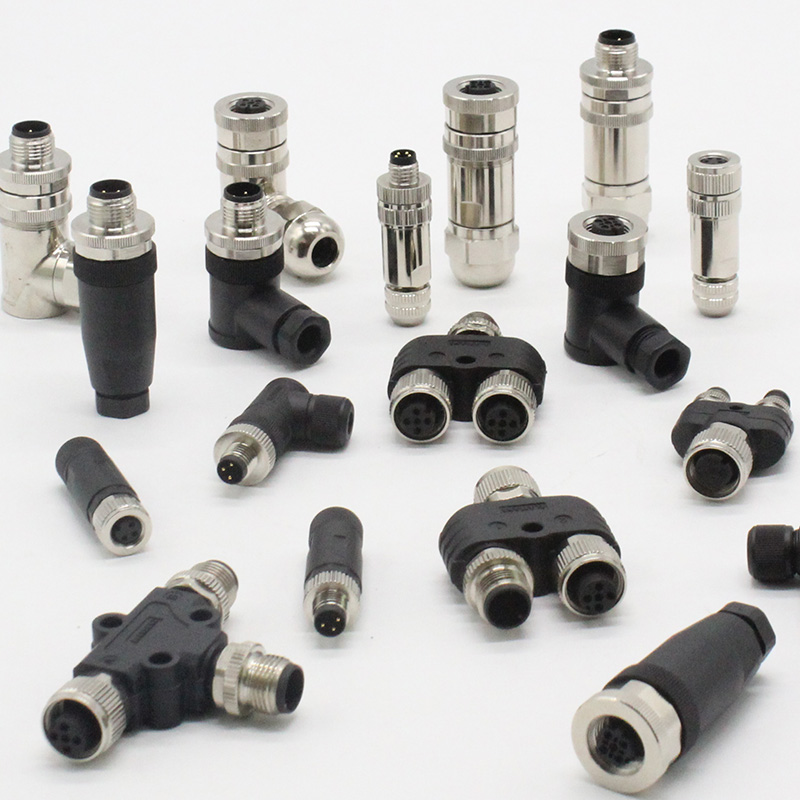
Reliability is also enhanced through rigorous testing processes. Connectors intended for extreme environments undergo environmental testing, such as temperature cycling, vibration testing, and salt spray testing, to simulate real-world conditions and ensure they meet performance standards. In aerospace, connectors must meet stringent requirements such as MIL-SPEC or SAE-AS standards, which specify durability and performance metrics. Only connectors that pass these tests are deemed fit for use in critical applications, ensuring their reliability under actual operating conditions.
In summary, by integrating temperature-resistant materials, vibration-absorbing features, and high ingress protection, automotive and aerospace connectors are built to provide long-lasting, stable connections in some of the harshest environments imaginable.

