High-speed and high-frequency data transmission demands, particularly for 5G and IoT, present significant challenges for connector technology. The primary requirements include maintaining signal integrity, minimizing interference, handling thermal management, and ensuring the reliability of connections under frequent usage. As devices and applications increasingly rely on rapid data transmission, connectors must evolve to handle higher frequencies and greater volumes of data without compromising performance.
One of the central challenges is signal integrity. At high speeds and frequencies, signals are more prone to degradation due to factors like impedance mismatches, signal reflection, and attenuation. Maintaining the integrity of these signals requires connectors that are precisely engineered with controlled impedance. For instance, connectors designed for high-speed applications often have internal structures that optimize the path of the signal to reduce potential disruptions. Maintaining impedance within narrow tolerances helps prevent reflection, a phenomenon where some of the signal’s energy is bounced back to the source, causing distortion and reducing transmission quality.
High-speed connectors are also prone to electromagnetic interference (EMI), which can distort signals and reduce the reliability of data transmission. To combat this, connectors are often shielded with conductive materials, such as copper or aluminum, that help block out external noise. Additionally, some connectors feature multi-layer shielding to protect against interference at different frequencies. The importance of shielding becomes more pronounced in environments with high levels of electronic noise, such as data centers, industrial facilities, or urban settings.
Thermal management is another significant challenge for high-speed connectors. High data rates generate considerable heat, which can damage connectors and the systems they support. To prevent overheating, manufacturers use materials that can withstand elevated temperatures and integrate heat dissipation features into connector designs. For example, connectors may have built-in venting or heat sinks, or they might use metal casings that naturally dissipate heat away from the contact points. In some high-power applications, water cooling or advanced thermal paste is used to maintain optimal operating temperatures.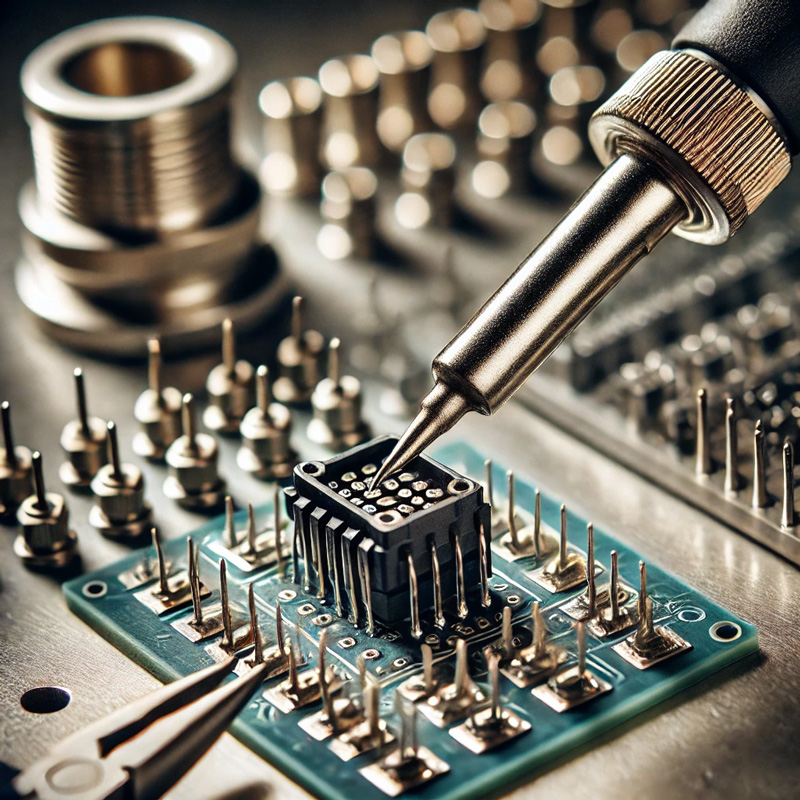
The physical durability of connectors is also a concern in high-speed applications, particularly when connectors are subject to frequent connections and disconnections. High-speed connectors are designed with robust contact points and secure locking mechanisms to withstand repeated use without becoming loose or worn. Gold-plated contacts are often used to provide both corrosion resistance and lower contact resistance, which is essential for maintaining signal quality at high speeds. Connectors for 5G and IoT applications often include specialized locking systems to ensure stable connections even in mobile or high-vibration environments.
In summary, achieving reliable high-speed and high-frequency transmission requires connectors that offer robust design, advanced shielding, and effective thermal management. These adaptations ensure that connectors can meet the performance and reliability standards demanded by 5G and IoT technologies.

