The trend toward smaller, more powerful electronic devices has placed unprecedented demands on connector technology, particularly in miniaturization and high-density designs. As devices like smartphones, wearables, and IoT sensors get smaller, connectors must be scaled down while still meeting high standards of reliability, performance, and durability. Achieving this balance is complex, as miniaturization often requires innovative design, precision engineering, and the use of advanced materials.
One key strategy for miniaturizing connectors involves developing micro and nano connectors that take up minimal space. Manufacturers employ laser welding, automated precision molding, and micro-injection techniques, which enable the creation of connectors with finer contact pitches and smaller footprints. These processes require extreme accuracy since even minor misalignments can lead to performance issues, such as poor signal transmission or increased susceptibility to wear and tear. For instance, USB Type-C connectors are widely used in small devices due to their slim design and ability to transfer both power and data efficiently, illustrating the shift towards multi-functional, space-efficient connectors.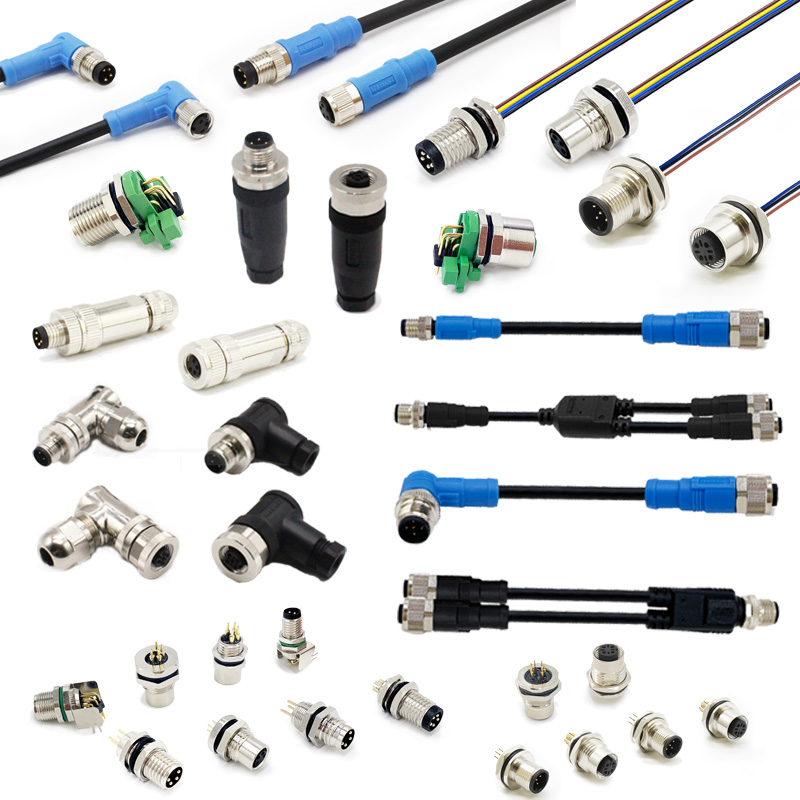
High-density connector designs, which involve packing more contact points or terminals into a smaller area, are also essential for miniaturized devices. This configuration allows connectors to handle more data or power channels within limited space, meeting the needs of applications that require high data transfer speeds. However, as the density of connectors increases, challenges like heat dissipation, signal interference, and structural integrity come into play. To combat these issues, manufacturers employ advanced contact layouts and shielding techniques to minimize crosstalk and interference between signal paths. Some designs use staggered or layered contacts to optimize space utilization without compromising signal integrity.
Moreover, miniaturized connectors must be robust enough to withstand repeated mating and unmating, which can lead to wear, especially with smaller contact points. To address this, manufacturers often use materials like gold-plated contacts, which resist corrosion and ensure consistent conductivity. Flexible printed circuit (FPC) connectors, commonly used in small devices, incorporate flexible contact designs that can endure the stresses of repeated use without losing performance. These connectors often feature locking mechanisms or latches to ensure a stable connection even when subjected to movement or vibration.
To further adapt to compact devices, connector designs also prioritize ease of assembly. As assembly spaces become smaller, connectors must be easy to handle and install. This is particularly relevant in automated assembly lines, where precision is crucial for maintaining quality in mass production. Connectors that are compatible with surface mount technology (SMT) have become more common, as they can be installed automatically using robotic systems, reducing errors and production costs.
Overall, adapting connectors for miniaturization and high-density demands involves a blend of innovative engineering and material science, ensuring that modern connectors can deliver high performance and reliability even in the smallest devices.

