The development of humanoid robots is closely related to the wire harness industry. It will not only bring about a significant increase in demand, but also drive profound changes and innovations in wire harness technology.
The Relationship Between Humanoid Robots and Wiring Harnesses: The "Neural Network" of Complex Life Forms
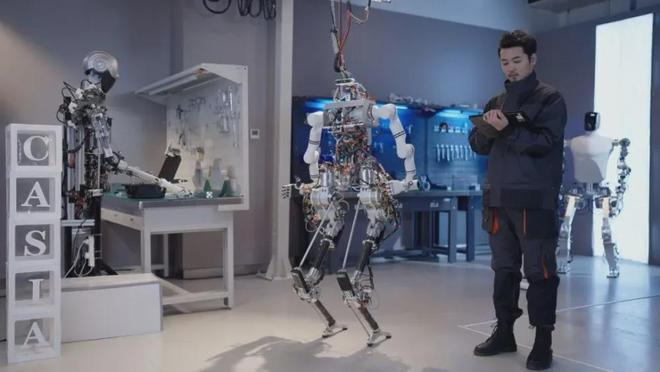
You can imagine a humanoid robot as a highly complex biomimetic electronic life form. If its metal skeleton is the "skeleton," the motors and joints are the "muscles," then the CPU and motherboard are the "brain," and the wiring harnesses are the "neural network" and "vascular system" that permeate the entire body.
1. Wire harnesses play a crucial role in humanoid robots:
Power Transmission (Blood Vessels): Responsible for delivering energy from the battery (heart) to all energy-consuming components such as joint motors, servo drives, and computing units. This part of the wiring harness needs to withstand large currents.
1) Signal Transmission (Neurons): Responsible for transmitting data signals at high speed and low latency between various sensors (vision, hearing, touch, force, inertial measurement, etc.) and the central processing unit, as well as between the processor and actuators. This is the foundation for the robot's ability to perceive its environment and make precise responses.
2) Overall Integration and Reliability: Thousands of wires need to be integrated through wiring harnesses to form a compact, reliable, and maintainable system. Messy, flying wires are unacceptable; wiring harnesses are key to achieving a systematic layout.
2. The Special Nature of the Relationship: Compared to traditional industrial robots (typically with fewer joints and a fixed range of motion) or automobiles, humanoid robot wiring harnesses face far more extreme challenges:
1) High Density and Miniaturization: Within the limited space of a humanoid body, far more sensors and actuators than a car need to be crammed in, resulting in extremely high wiring harness density.
2) Continuous Dynamic Bending: The robot's joints (such as elbows, knees, and fingers) require repetitive, high-frequency bending movements. This places extreme demands on the flexibility and fatigue resistance of the wiring harness.
3) Lightweighting Requirements: The weight of the wiring harness directly affects the robot's energy consumption and motion performance; every gram is crucial.
 Expected Demand Growth and Transformative Innovation
The rise of humanoid robots represents not merely a simple increase in quantity for the wiring harness industry, but a qualitative leap, driving the industry to a higher level of development.
1. Demand Growth
1) Total Volume Growth: Once humanoid robots achieve mass production, even a single model's wiring harness complexity and total length may far exceed that of an ordinary car. This will bring huge new markets to wiring harness manufacturers.
2) High-Value Wiring Harness Demand: Robots use not ordinary low-voltage wires, but customized, high-value-added cables and connectors with special properties (such as high flexibility, bending resistance, and strong shielding), resulting in higher unit value.
3) Specialized Sensor Wiring Harnesses: Cameras, LiDAR, torque sensors, etc., require specialized coaxial cables, twisted-pair cables, etc., leading to a surge in demand for these wiring harnesses.
2. Transformation and Innovation: Humanoid robots will become the "strongest catalyst" for wiring harness technology innovation, driving changes in the following directions:
1) Materials and Structural Innovation:
- Wide Application of Flexible Cables: Similar to the "drag chain cables" used in robotic arms, but with higher requirements, new flexible conductors and insulation materials with bending life exceeding 10 million cycles or even higher will be developed.
- Flat Equivalent Wiring Harnesses: To save space and facilitate wiring, FPC (Flexible Printed Circuit) and FFC (Flexible Flat Cable) may largely replace traditional round wires in infrequently bending areas such as the robot's torso.
- Lightweight Materials: Thinner insulation layers, aluminum wires replacing some copper wires (while maintaining conductivity), and lighter shielding and sheathing materials are used.
2) Connectivity Revolution:
- Modularization and Plug-and-Play: To facilitate production and maintenance, the wiring harnesses for various robot limbs (such as arms and legs) may be designed modularly, connecting to the torso via a few high-performance, high-reliability quick-plug connectors.
- Wireless Reduction: For some non-critical or low-data-volume sensors, short-range wireless communication technologies (such as UWB and Bluetooth Mesh) may be used to replace physical wiring harnesses, achieving "wiring harness reduction." However, this is difficult to achieve in the short term for power and critical signal transmission.
3) Digitalization of Design and Manufacturing Processes:
- Collaborative Design Based on 3D Models: Wiring harness design will be deeply integrated into the robot's overall digital twin model, proceeding simultaneously with structural design, simulating wiring paths and bends in advance to avoid interference.
- Automated Production and Customization: Due to the wide variety of robot models and high degree of customization, traditional large-scale automotive wiring harness production lines may need to shift towards more flexible automated units, such as using robots for automated cutting, crimping, and assembly of wiring harnesses.
4) New Industry Standards and Testing Methods:
The industry will establish new standards and testing specifications for "service robot wiring harnesses," particularly developing rigorous testing procedures for dynamic bending life, electromagnetic interference resistance, and reliability under vibration environments.
Conclusion
Humanoid robots represent a completely new, high-end, and highly challenging incremental market for the wiring harness industry. It will not replace traditional markets such as automotive, but it will open up a completely new technological track. For wiring harness companies, this presents both opportunities and challenges:

