The future of sensor connectors is closely tied to the evolution of Industry 4.0 and the Internet of Things (IoT), which are driving significant advancements in automation, data collection, and communication. Here are several key trends shaping the development of sensor connectors: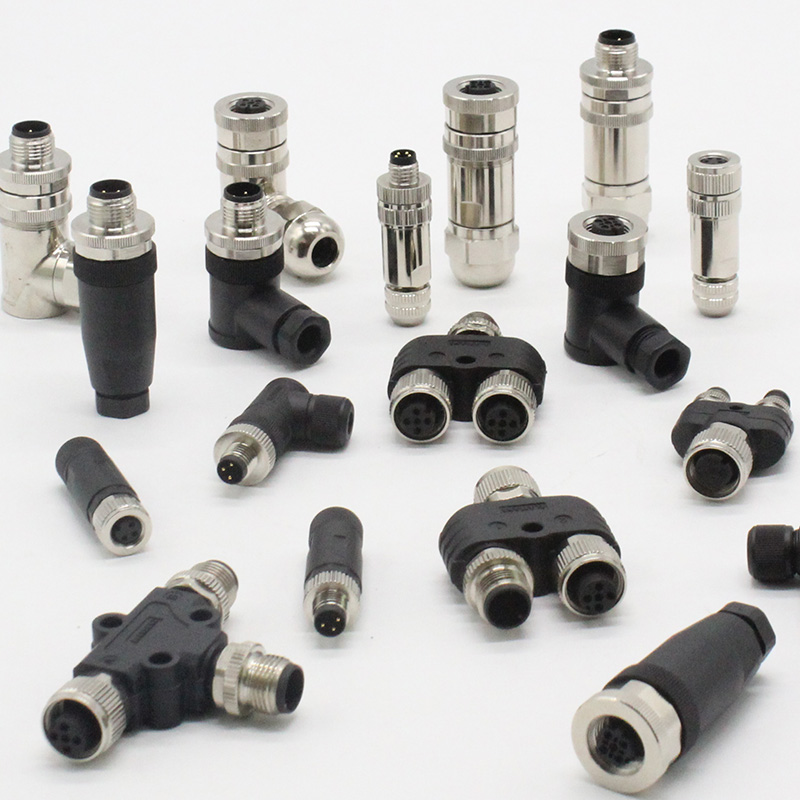
Miniaturization and High-Density Connectors:
As the number of sensors increases in Industry 4.0 applications, there is a growing demand for miniaturized connectors that can handle high data and power transmission within a smaller footprint. In IoT-enabled factories, thousands of sensors may be deployed to monitor every aspect of the production process. To accommodate this, sensor connectors need to be smaller yet capable of supporting more connections per square inch. This has led to the development of high-density connectors that allow multiple sensor signals to be routed through a single connector, saving space and simplifying wiring.
Wireless Connectivity and Smart Connectors:
The rise of wireless communication is reducing the reliance on physical connectors in some applications, particularly for sensors in remote or hard-to-reach locations. Smart connectors that combine wireless communication with traditional wired connections are becoming increasingly popular. These connectors are equipped with built-in diagnostics and self-monitoring capabilities, allowing them to detect issues such as signal loss or wear and tear before failure occurs. By providing real-time data on connector performance, smart connectors help improve system reliability and reduce downtime for maintenance.
Increased Data Rates and Signal Bandwidth:
Industry 4.0 requires faster and more efficient data transmission as machines and sensors communicate vast amounts of information. Sensor connectors must support higher data rates and increased signal bandwidth to accommodate this demand. In applications such as predictive maintenance, sensors continuously collect data on equipment performance, which is analyzed in real-time to predict failures before they happen. High-speed connectors capable of transmitting large volumes of data quickly and accurately are essential for these systems to function effectively.
Sustainability and Green Manufacturing:
The push for sustainability is influencing the materials and manufacturing processes used in sensor connectors. Eco-friendly materials that are recyclable or biodegradable are gaining traction, especially in industries focused on reducing their environmental impact. Additionally, manufacturers are seeking to reduce energy consumption and waste during production. Connectors that are designed for longer lifespans and are easy to disassemble and recycle will likely become more common as part of this trend toward greener manufacturing.
Cybersecurity and Data Integrity:
As more sensors and connectors are connected to networks through the IoT, concerns over cybersecurity and data integrity are growing. Sensor connectors used in critical industries, such as energy or healthcare, must be designed with robust security features to prevent unauthorized access or tampering. Connectors with encrypted data transmission and secure authentication protocols are becoming more necessary to ensure that sensitive information is not compromised during transmission between sensors and control systems.
In conclusion, the future of sensor connectors is being shaped by miniaturization, wireless technology, increased data transmission capabilities, sustainability, and the need for enhanced cybersecurity. These trends are driving the development of more intelligent, reliable, and environmentally friendly connectors that can support the growing demands of Industry 4.0 and the IoT.


