Industry 4.0 cables and their
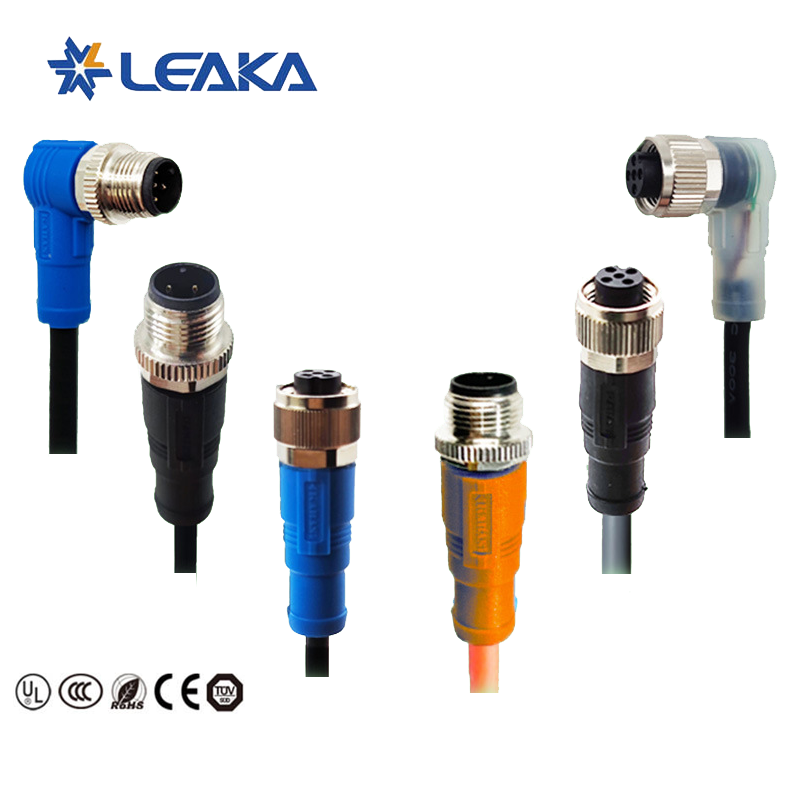
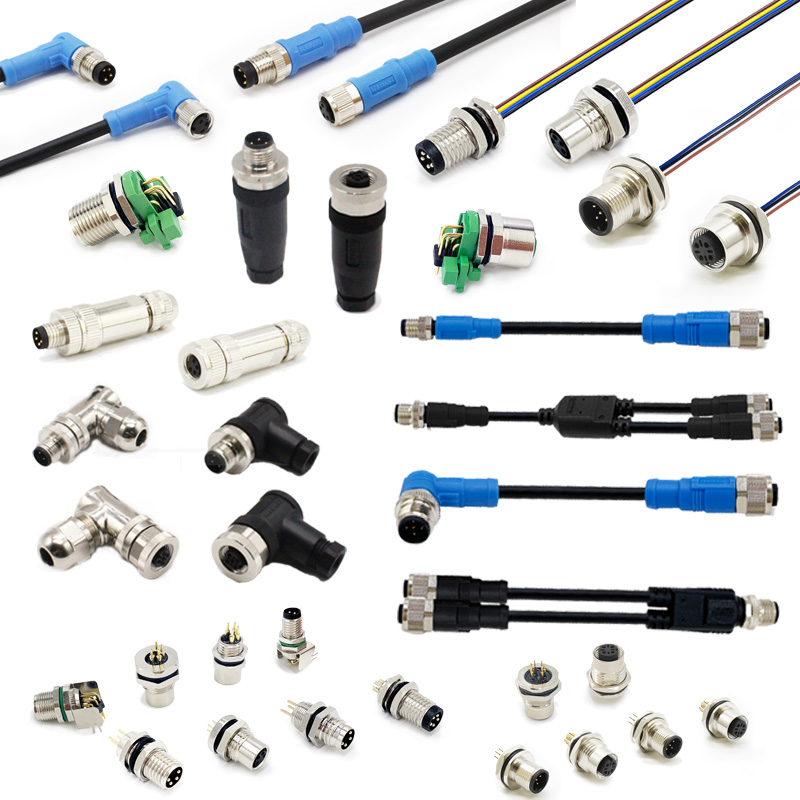
connectors (Figure 2) ensure reliable power, data, and signal transmission between interconnected components, equipment, and systems. They can also seamlessly connect switches, access points (APs), radios, and small cells, maintaining stable and secure connections, supporting real-time communication and automation over short and long distances. In order to maintain signal integrity and operational efficiency, Industry 4.0 connectors must meet specific technical requirements for their target applications, including:
Bandwidth: Most Industry 4.0 Gb Ethernet connectors support speeds of up to 10Gb/s, which is crucial for real-time communication and protocols such as EtherCAT, PROFINET, and OPC UA. By using advanced Cat 8 Ethernet cables and compatible connectors, higher data rates ranging from 40 Gb/s to 100 Gb/s can be achieved.
Power supply: The connector can safely handle high voltage and current, and minimize power loss to the greatest extent possible. Contact resistance, conductor materials, and coatings optimize power transmission capabilities, while shielding protects nearby equipment from radio frequency interference (RFI) and ensures electromagnetic compatibility (EMC).
Signal integrity: High speed Industry 4.0 connectors optimize transmission by minimizing insertion loss and crosstalk. Robust shielding reduces RF interference and EMI, maintaining signal integrity near the motor and power supply, while integrated EMC suppression further mitigates interference.
Durability: Industry 4.0 connectors can operate reliably under harsh conditions, withstand extreme temperatures, humidity, corrosive pollutants, and vibrations. Some connectors in testing equipment, robots, and industrial automation systems must be able to withstand frequent connections and disconnections. IP69K and other IP grade connectors ensure cable fixation and have a wide temperature resistance (from -40 ° C to 125 ° C or higher), ensuring reliable performance in foundries, chemical processing plants, and material handling facilities.
Termination: Typically, crimping, welding, or insulation piercing (IDC) termination types are chosen to meet the requirements of specific applications. In Industry 4.0 optical networks, connectors must be able to achieve safe fiber fusion splicing, reliable termination, and precise alignment.
Dimensions and external dimensions: Compact connectors with internal locking mechanisms or hybrid designs support integration of other components in robots, automated assembly lines, and sensor networks. Large and medium-sized connectors support applications that require higher power or data throughput.
Standard Compliance: Industry 4.0 connectors comply with numerous industry standards, such as the International Organization for Standardization (ISO), the International Electrotechnical Commission (IEC), the American National Standards Institute (ANSI), the Telecommunications Industry Association (TIA), and the Institute of Electrical and Electronics Engineers (IEEE). Many also support EtherCAT, CANbus, and PROFINET communication protocols.