Realize electrical connection, distribute electric energy, signal transmission, convenient installation.
Function
1. Realize Electrical Connection:
The rail-type terminal block is mainly used to realize electrical connection and is a bridge for connecting wires in the circuit. It can connect multiple wires together in an orderly manner, which is convenient for the installation, maintenance and repair of the circuit.
2. Distribute Electric Energy:
The rail-type terminal block can distribute electric energy and reasonably distribute the electric energy of the main power supply to various electrical equipment.
3. Signal Transmission:
In the signal transmission circuit, the rail-type terminal block can accurately transmit the control signal to ensure the stable operation of the system.
4. Convenient Installation:
The rail-type design makes it easy to install and can be flexibly combined and expanded according to needs, which greatly improves the flexibility and reliability of the electrical system.
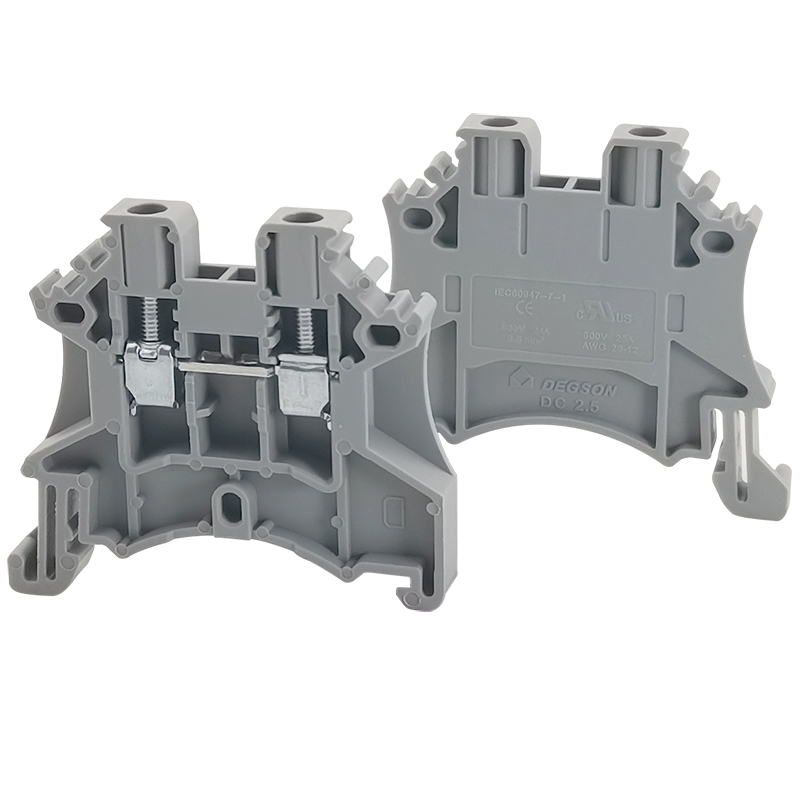 Model
Model1. Classification by Current Carrying Capacity
1) Small current type: The rated current is generally 10-20A, which is suitable for low-power scenarios such as control circuits and signal transmission, and is often used for signal connection in PLC control cabinets.
2) High current type: The rated current can reach more than 60A, which is mainly used in high-power circuits such as power distribution systems and motor control, and can meet the needs of high current transmission.
2. Classification by Functional Characteristics
1) Ordinary type: Basic connection function, such as the common UT series, suitable for most conventional electrical connection scenarios.
2) Grounding type: with a special grounding terminal, such as the PE series, to ensure reliable circuit grounding and enhance system safety. It is often used in places with high electrical safety requirements.
3) Fuse type: integrated fuse function. When the circuit current is overloaded, the fuse automatically blows to protect the circuit. For example, Phoenix's fuse terminal block is widely used in electronic equipment protection.
Installation
1. Preparation Before Installation
Confirm that the model and specifications of the rail-type terminal block are consistent with the design requirements, and check that the terminal block appearance is not damaged or deformed, and the connection parts are not oxidized.
Prepare installation tools such as screwdrivers and wire strippers; prepare suitable wires to ensure that the wire specifications match the terminal block requirements and the insulation layer is not damaged; and prepare installation rails and fixing screws.
2. Install the Rail
According to the installation location, use screws to firmly fix the 35mm standard DIN rail on the electrical cabinet or equipment mounting plate to ensure that the rail is horizontal and stable, providing a reliable foundation for terminal block installation.
3. Install the Terminal Block
Push the rail-type terminal block gently along the rail slot until it is clamped on the rail. According to actual needs, multiple terminal blocks can be installed and arranged neatly. If expansion is required, terminal blocks can be added.
4. Wiring Operation
Strip the insulation layer at the end of the wire with wire strippers, and the length is moderate (generally 6-8mm). Insert the stripped wire into the terminal block wiring hole to ensure that the wire is fully inserted.
Use a screwdriver to tighten the screws on the terminal block to fix the wire to ensure a firm connection and good contact. For multi-strand wires, it is recommended to use cold-pressed terminals before connecting to prevent the wires from loosening.
5. Arrangement and Identification
Arrange the wires with cable ties to make the wiring neat and avoid the wires from entangled with each other. Install identification plates for each wire to clearly mark the wire connection direction, function and other information to facilitate subsequent maintenance and troubleshooting.
 Model
Model

