Common RF connector interface types include: N-type interface, SMA interface (SubMiniature version A), BNC (Bayonet Neill-Concelman) interface, TNC (Threaded Neill-Concelman) interface. Their core differences are reflected in structure, frequency range, application scenarios, etc.
Common RF connector interface types include: N-type interface, SMA interface (SubMiniature version A), BNC (Bayonet Neill-Concelman) interface, TNC (Threaded Neill-Concelman) interface. Their core differences are reflected in structure, frequency range, application scenarios, etc., as follows:
1. Structure and Termination Method
N-type
- Threaded connection, using a rotation locking mechanism, the male head is larger (outer diameter 7mm), and the female head is smaller (outer diameter 6.5mm).
- Shielding design: The internal contacts have a metal shielding layer, the core head has no additional protection, and is easily damaged.
SMA
- Threaded connection, the male head is smaller (outer diameter 4.13mm), the female head is larger (outer diameter 6.5mm), and the withstand voltage is high (500Vrms).
- High frequency application: supports up to 18GHz, suitable for microwave and digital communication systems.
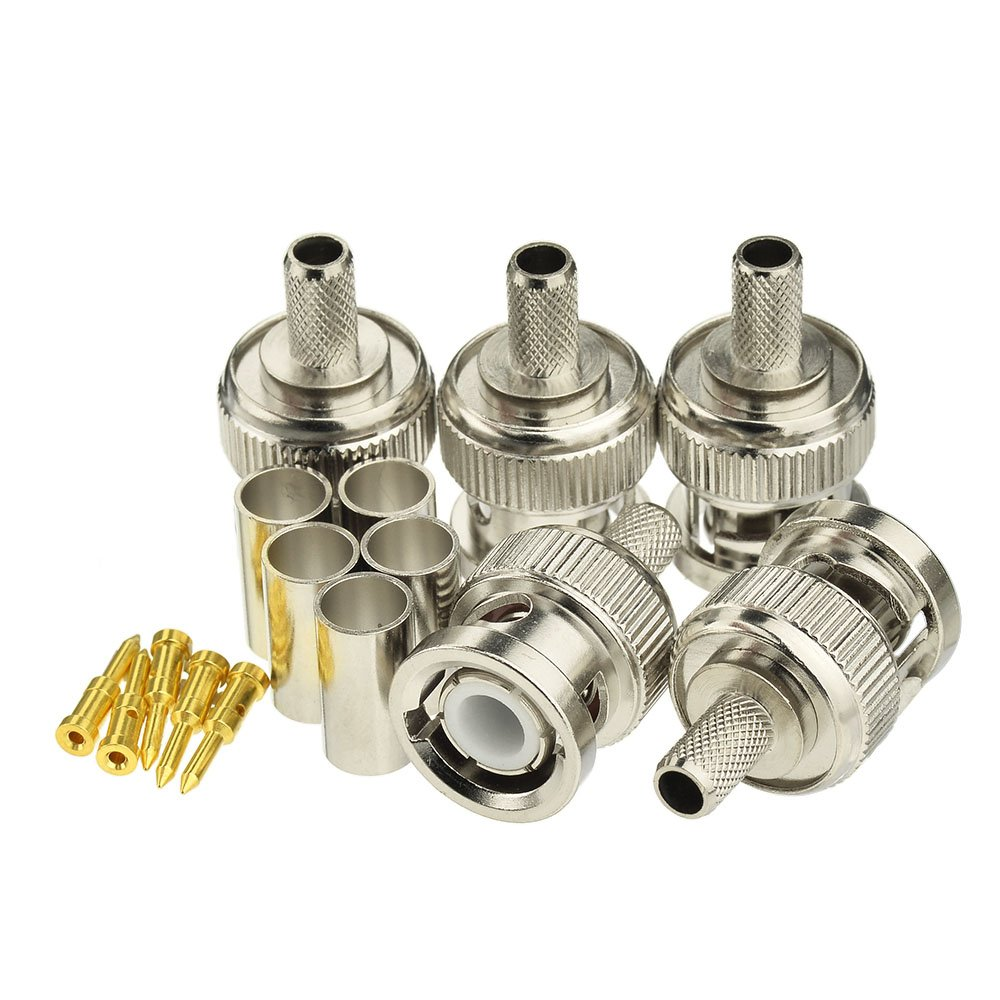
BNC
- Bayonet lock, threadless design, quick plug and unplug, small size (outer diameter 6.5mm).
- Low frequency advantage: working frequency 0-4GHz, suitable for test equipment and video signal transmission.
TNC
- Threaded connection, male right angle, interchangeable BNC interface, suitable for high frequency (0-11GHz).
- Strong shock resistance, mechanical and electrical performance is better than BNC, widely used in military and satellite communications.
 2. Frequency Range
N type: DC-18GHz, support 50Ω/75Ω impedance.
SMA: DC-26.5GHz, high frequency band application.
BNC: DC-12GHz, obvious advantages in low frequency band.
TNC: DC-11GHz, best performance in high frequency band.
3. Application
N type: high power, low frequency equipment, such as ground launch systems, instruments in vibration environments.
SMA: satellite communications, aerospace, high frequency test equipment.
BNC: Video equipment, test instruments, and scenarios requiring fast connection.
TNC: High-frequency testing, military equipment, and scenarios requiring interchangeability.
 2. Frequency Range

