- Contact resistance test introduction
Contact resistance test, also known as Ductor test, measures the resistance of electrical connections - terminals, joints, connectors, busbar sections or cable connections. Such measurements are performed on components such as connectors, relays and switches. Contact resistance test can understand the quality of the connection and its conductive properties of the circuit to avoid dangerous overheating of the contacts.
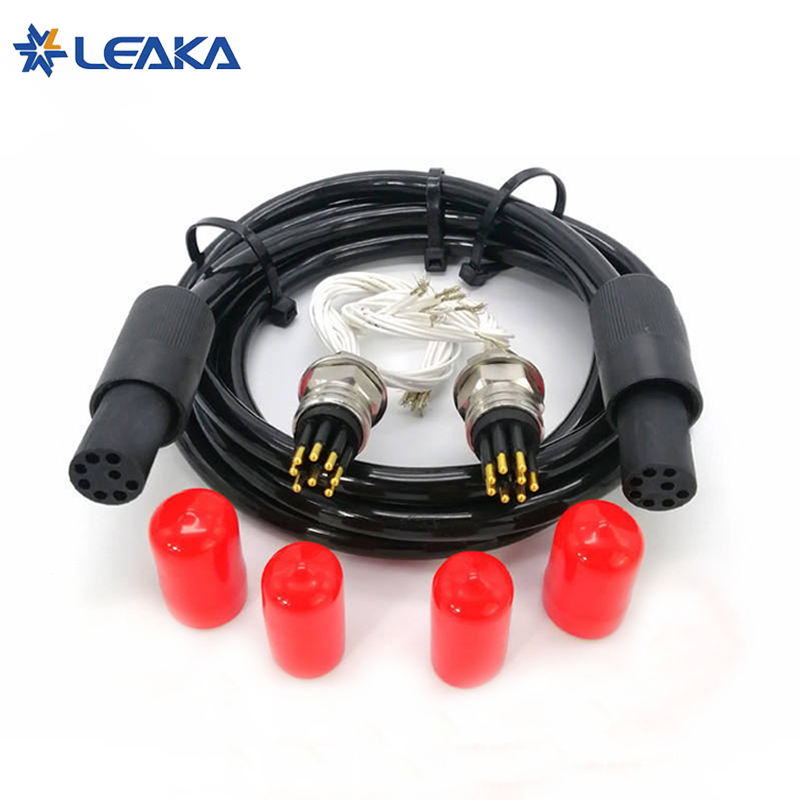
- Principle of contact resistance
Observe the surface of the connector contact under a microscope. Although the gold-plated layer is very smooth, 5-10 micron protrusions can still be observed. You will see that the contact of a pair of plugged contacts is not the contact of the entire contact surface, but the contact of some points scattered on the contact surface. The actual contact surface must be smaller than the theoretical contact surface. Depending on the surface smoothness and the size of the contact pressure, the difference between the two can be up to several thousand times. The actual contact surface can be divided into two parts; one is the part where the real metal directly contacts the metal. That is, the contact micro-points between the metals without transition resistance, also known as contact spots, are formed after the interface film is destroyed by contact pressure or heat. The part accounts for about 5-10% of the actual contact area. The second is the part that contacts each other after the thin film is contaminated through the contact interface. Because any metal has a tendency to return to the original oxide state.
In fact, there is no truly clean metal surface in the atmosphere. Even a very clean metal surface will quickly generate a few microns of initial oxide film once exposed to the atmosphere. For example, copper only needs 2-3 minutes, nickel about 30 minutes, and aluminum only needs 2-3 seconds to form an oxide film with a thickness of about 2 microns on its surface. Even the particularly stable precious metal gold will form an organic gas adsorption film on its surface due to its high surface energy. In addition, dust in the atmosphere will also form a deposition film on the surface of the contact. Therefore, from a microscopic analysis, any contact surface is a contaminated surface.
- Factors affecting contact resistance
1. Contact form
2. Contact pressure
3. Smoothness of contact surface
4. Stability of contact resistance in long-term operation
5. Temperature
6. Material properties
7. Use voltage and current

- Contact resistance test requirements
1. Use a 300V insulation resistance meter for testing.
2. The contact resistance of the tested product should be less than 1Q.
3. The test product must be more than 5PCS.
- Contact Resistance Test Contents
Two common inspections performed on circuit breaker contacts are visual inspection and contact resistance inspection.
1. The visual inspection includes checking the circuit breaker contacts for dents due to arcing and contact wear or deformation.
2. The second inspection is the contact resistance measurement. This involves injecting a fixed current, usually around 100A, 200A, and 300A, through the contacts and measuring the voltage drop across them. This test is done using a special contact resistance measuring instrument. Then, the resistance value is calculated using Ohm's law. The resistance value needs to be compared with the value given by the manufacturer. This value should also be compared with previous records.
- Purpose of Contact Resistance Test
Contacts in circuit breakers need to be checked regularly to ensure that the breakers are healthy and functioning properly. Bad or poor contact can cause arcing, phase loss, and even fire. This test is especially important for contacts that carry large amounts of current, such as switchgear busbars, as higher contact resistance results in lower current carrying capacity and higher losses. Ductor testing is typically performed using a micro/milliohm meter or low-ohm meter. Measurement of contact resistance helps identify fretting corrosion of contacts and can diagnose and prevent contact corrosion. Increased contact resistance can result in high voltage drops in the system and need to be controlled.
These two tests need to be done together. Because there are cases where a contactor has good contact resistance but is still in a damaged state. Therefore, for a contactor to be proven healthy, it needs to have good contact resistance and should clear the visual inspection test.

