Waterproof electrical connectors, such as those that meet IP68 or MIL-STD-810G standards, are designed for harsh environments. However, long-term immersion can degrade their performance. Signal instability usually stems from multiple interacting factors rather than a single problem.
Waterproof electrical connectors, such as those that meet IP68 or MIL-STD-810G standards, are designed for harsh environments. However, long-term immersion can degrade their performance. Signal instability usually stems from multiple interacting factors rather than a single problem.
Reasons
1. Degraded sealing performance and micro-leakage
Over time, repeated pressure cycles (such as tidal changes) can fatigue the sealing material. Silicone or rubber gaskets can develop micro-cracks that are not detectable by visual inspection. These micro-cracks can cause tiny water infiltration, which changes the dielectric properties of the insulation layer. Even trace amounts of moisture between contacts can generate parasitic capacitance, causing high-frequency signal distortion. Connectors immersed in salt water can accelerate seal corrosion due to differences in osmotic pressure.
2. Contact interface corrosion
Although gold-plated contacts are resistant to oxidation, long-term exposure to ionic contaminants (such as seawater) can penetrate plating defects. Chloride ions can induce electrochemical corrosion between dissimilar metals - this is common in multi-material connectors. This increases contact resistance and causes poor connections. The depressed surfaces can also generate electrical noise during vibration.
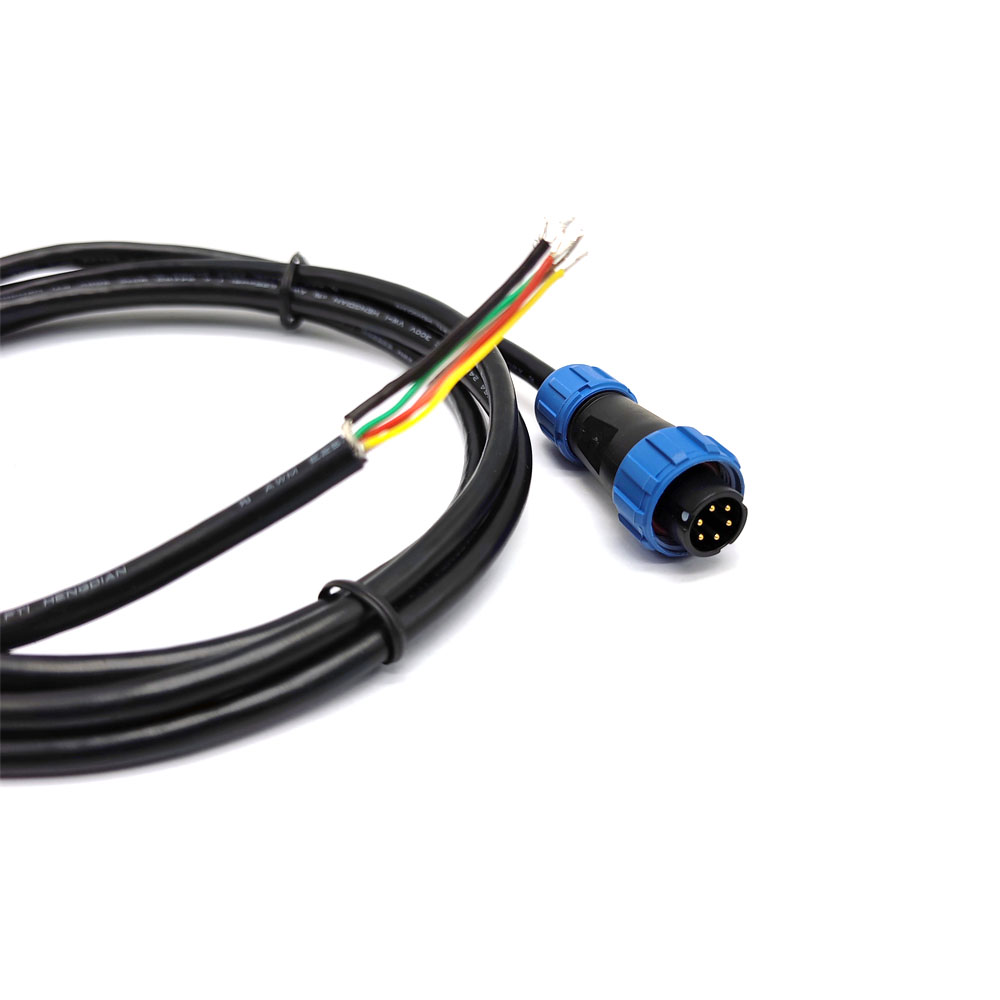 3. Cable Jacket Penetration
When immersed in water for long periods of time, water molecules can penetrate the polymer cable jacket. Hydrophobic materials (such as PTFE) resist this penetration, but standard PVC or polyurethane jackets gradually absorb moisture. This moisture migrates to the termination points, forming parallel conductive paths. Shielded cables are particularly susceptible because water can bridge between the shield and the conductors, causing crosstalk.
4. Biofouling and Debris Buildup
Marine organisms (e.g., barnacles, algae) can colonize connector surfaces, physically replacing seals. Organic acids in biofilms can corrode metal housings. Sediment particles trapped at the mating interface can prevent proper mating, increasing insertion loss.
5. Thermal Stress Effects
Underwater temperature fluctuations can cause repeated expansion/contraction. Thermal coefficient mismatches between connector materials (e.g., stainless steel housing vs. plastic insert) can cause the interface to deform. This can cause contacts to misalign and disrupt the continuity of EMI shielding.
Mitigation Strategies
Material Upgrade: Use fluoroelastomer seals (FKM) instead of EPDM and plate precious metals (palladium nickel) on contacts.
Pressure Equalization: For deepwater applications, deploy connectors with compensating oil-filled chambers.
Redundant Seals: Use a triple seal design (radial, face, and thread seals) similar to subsea connectors.
Proactive Maintenance: Perform impedance testing (TDR) and insulation resistance checks every 500 hours of diving time.
Cable Management: Specify extruded, non-hygroscopic insulation materials such as radiation-cross-linked polyolefins.


