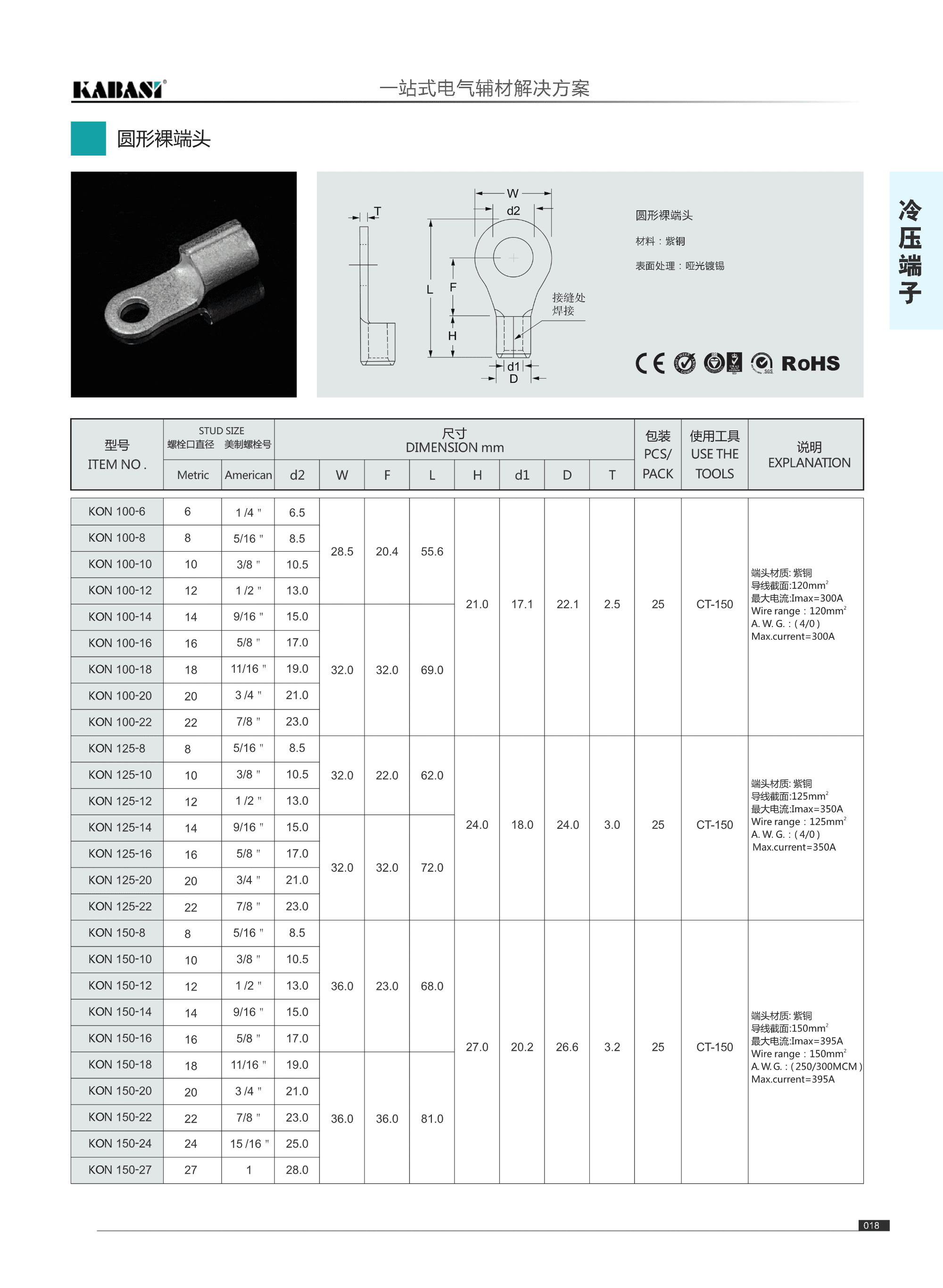
Products ShowCable lugs are crucial components in electrical systems, offering secure and reliable connections between cables and other electrical devices. Their importance lies in ensuring efficient electrical conductivity and safety across various applications. Understanding the different types of cable lugs, along with their sizes, specifications, and selection criteria, is essential for choosing the appropriate lug for specific requirements. Proper installation techniques, including the correct use of tools and adherence to guidelines, are vital for establishing durable and safe connections. Additionally, routine maintenance and inspection are necessary to maintain the integrity of these connections over time, preventing potential issues such as overheating or equipment failure. By paying close attention to these aspects, you can ensure the long-term performance and safety of your electrical installations.
| Type |
Crimp Terminal |
| Color |
Silver |
| Material |
Copper |
| Surface Treatment |
Matte tin plating |
| Wire Range |
4-6mm² |
| Max. current |
48A |
| AWG |
12-10 |
| MOQ |
100 PCS |
| Application |
Wire Connecting |
 How to Select the Right Cable Lugs
1. Assessing Application Requirements
Selecting the right cable lug involves understanding the specific requirements of the application. Factors such as the type of conductor, the current and voltage levels, and the environmental conditions must be considered. It is crucial to choose a lug that matches the application's demands to ensure safety and performance.
2. Considering Environmental Conditions
The environment in which the cable lug will be used can significantly impact its performance. Factors such as temperature, humidity, and exposure to corrosive substances must be considered. For harsh environments, choosing lugs with appropriate protective coatings or made from corrosion-resistant materials is essential.
3. Compatibility with Cables
Ensuring compatibility between the cable lug and the conductor is vital for a secure and reliable connection. This includes matching the lug's size and material with the conductor's specifications. Proper compatibility prevents issues like overheating or electrical faults.
4. Quality Standards and Certifications
When selecting cable lugs, it is essential to choose products that meet industry standards and certifications. This ensures that the lugs have been tested for quality, safety, and performance. Look for certifications such as UL (Underwriters Laboratories) or CE (Conformité Européene) marks.
Company Profile