Products Description
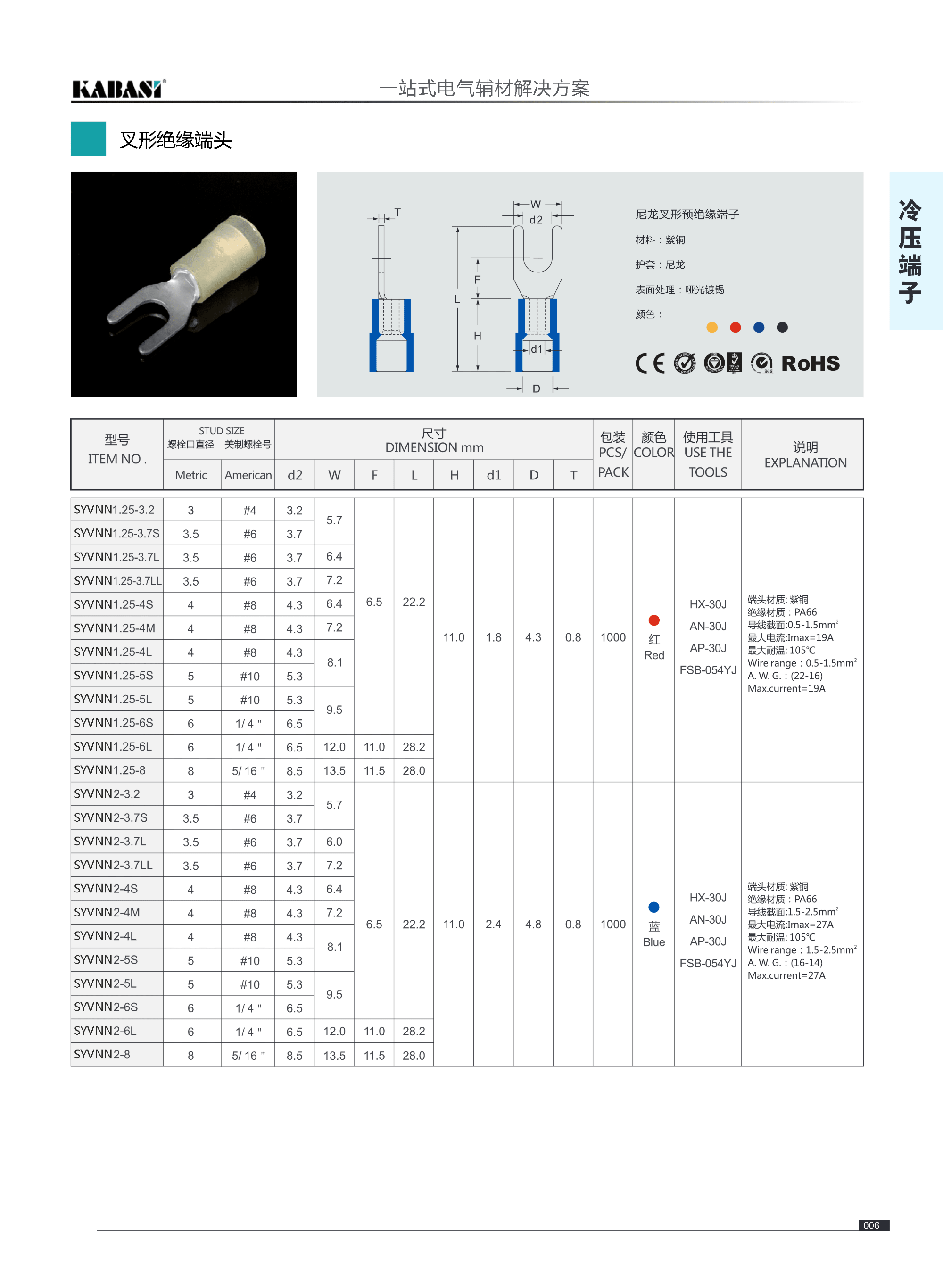
Structural features: Fork terminals usually have a U-shaped or V-shaped plug with two curved arms, which enables them to easily clamp conductive parts such as wires or cables.
Installation convenience: The fork terminal design enables them to quickly connect wires. When connecting or disconnecting, just loosen the screws and bolts without complete disassembly.
Wide application: Fork terminals are widely used in household and industrial electrical equipment, such as sockets, switches, distribution boards, and power tools.
Diverse models: There are many models of fork terminals, each suitable for different current capacities and wire sizes.
Specification selection: The specifications of fork terminals usually depend on the current capacity and wire size of their design. Common current capacities range from 10A to 200A, and wire sizes range from 0.5 square millimeters to 4 square millimeters.
How to use: When using fork terminals, first strip the protective layer of the wire to expose a certain length of bare wire, then insert the wire into the clamp of the fork terminal, and use a crimping pliers or crimping tool to firmly connect the terminal to the wire.
Crimp tools: Fork terminals are usually crimped using crimping pliers, which can be manual or hydraulic, depending on the specification and batch size of the terminals.
| Type |
Crimp Terminal |
| Color |
Blue/Yellow/Red |
| Lead Section |
0.5-1.5mm² /1.5-2.5mm² / 4-6mm² |
| Max Current |
Imax=19A |
| Material |
Copper |
| Insulation |
PA66 |
| Surface Treatment |
Matte tin plating |
| A.W.G |
22-16 AWG /16-14 AWG /12-10 AWG |
| Rated Voltage |
220V |
| Max. temperature resistance |
105℃ |
| Packaging Details |
100/500/1000pcs |
Product Advantages
Innovative Design Tailored for Modular Integration
This fork lug’s fork-shaped architecture delivers simplicity and flexibility, facilitating swift wire attachment in terminal block assemblies specified by reputable terminal block manufacturers. The use of high-conductivity copper combined with durable nylon insulation advances the structural integrity and electrical isolation standards crucial in custom terminal block solutions. Color coding simplifies circuit management and diagnostic verification, minimizing human error during installation and servicing. The matte tin plating further extends lifespan under environmental stresses, complementing the system designs preferred by experienced terminal block suppliers seeking high-quality, modular components.
Enhanced Performance and Practical Benefits for Operators
The Cable Lug Copper Terminal Fork Lug 22-16AWG promotes operational efficiency by ensuring secure, low-resistance connections that support up to 19A current capacity. Its compatibility with multiple wire gauges aids users in diverse electrical projects, allowing seamless integration with terminal block frameworks procured from verified terminal block manufacturers. Ease of installation shortens downtime and reduces labor costs, optimizing return on investment. Its resilience against temperature extremes up to 105℃ guarantees stable performance in demanding conditions, making it a valued solution within custom terminal block deployments requiring both reliability and user-friendly application.
 Certificates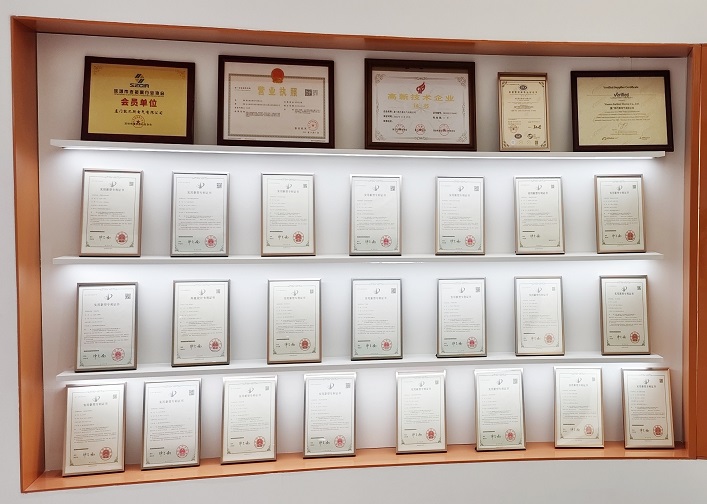
FAQ
What wire sizes are compatible with the Cable Lug Copper Terminal Fork Lug 22-16AWG?
Our terminal supports wire sizes ranging from 22 to 16 AWG, which corresponds to 0.5-1.5mm², 1.5-2.5mm², and 4-6mm². This ensures compatibility with a wide range of industrial wiring applications requiring precise and secure connections.
Can you provide custom terminal block solutions to fit specific project requirements?
Yes, as an experienced terminal block manufacturer, we work closely with clients to provide tailored custom terminal block solutions. Contact us to discuss your project specifications, and our R&D team will support your customization needs efficiently.
How do I properly install the cable lug onto the wire?
First, strip the wire insulation to expose the bare conductor. Insert this into the fork lug terminal, then use appropriate crimping tools to secure the connection. The fork design enables quick attachment to terminal blocks without full disassembly, facilitating easier maintenance.
What are the packaging options and delivery capabilities for bulk orders?
We offer packaging in quantities of 100, 500, or 1000 pieces to suit different order sizes. Our supply chain supports global exporters, ensuring timely delivery and reliable supply for industrial-scale demands of terminal block suppliers worldwide.


