Design: Prioritize dynamic contact compensation and locking mechanisms.
Material: Combine wear-resistant coatings with anti-fatigue alloys.
Testing: Verify performance under actual stress conditions.
These strategies improve the reliability of connectors in high-frequency applications and meet the stringent requirements of military, aerospace, and industrial systems.
Frequent plugging and unplugging can cause connector loosening, which leads to mechanical wear, increased contact resistance, and failure of the locking mechanism.
1. Enhanced locking mechanism
- The spring-assisted locking system improves reliability. The spring-loaded coupling nut automatically resets after each plugging and unplugging, and maintains a consistent locking force. For example, the MIL-DTL-38999 connector uses a three-start thread and can withstand more than 10,000 plugging and unplugging cycles.
- Secondary locking devices prevent accidental disconnection. Push-pull locks or ratchet designs are common. Aviation connectors often include anti-decoupling pins. Manual intervention is required for separation.
2. Wear-resistant contact design
- Upgraded plating reduces friction. The contacts use a thick gold layer (≥50 µin) or palladium nickel (PdNi) alloy. Gold-plated contacts still maintain a resistance of <5mΩ after 5,000 cycles.
- Hyperbolic or spring finger contacts can evenly distribute wear. These designs dynamically adjust during mating and unmating, extending contact life.
3. Fatigue-resistant materials
- High-strength alloys resist deformation. 7075-T6 aluminum or titanium (Ti-6Al-4V) housings withstand repeated stresses.
- Elastomeric seals maintain performance. Fluorosilicone (FVMQ) or perfluoroelastomer (FFKM) seals remain flexible. They withstand temperatures from -55°C to 175°C.
4. Durability verification testing
- Mechanical cycle testing simulates actual use. MIL-STD-1344 requires 10,000 cycles. Locking force must remain above 80% of initial value.
- Contact resistance testing ensures stability. MIL-STD-202 Method 307 limits resistance change after testing to less than 3%.
- Comprehensive environmental testing adds stress. The connector is subjected to vibration (20-2000Hz) and thermal shock (-65°C↔200°C) during the plugging and unplugging process.
Case
For SMA (SubMiniature version A) plugs, this problem is particularly prominent. As a widely used RF coaxial connector, SMA plugs are often used in communications, radar, test and measurement and other fields, and the stability of their connection is crucial. The loose connection caused by frequent plugging and unplugging will not only affect the quality of signal transmission, causing signal attenuation and interruption, but also may generate additional resistance due to poor contact, causing heat, thereby shortening the service life of the equipment, and even causing serious safety hazards in some occasions with extremely high reliability requirements, such as aerospace and medical equipment.
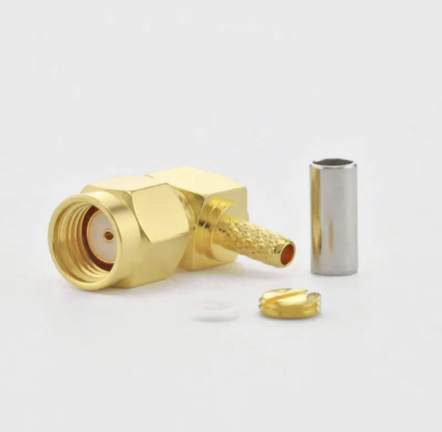
A common anti-loosening design for SMA plugs is threaded fastening. By setting fine threads on the plug and socket, the plug is screwed into the socket when connected, and the friction and self-locking characteristics of the threads are used to effectively prevent the plug from loosening due to external force or vibration.
However, in some scenarios where frequent and fast plugging and unplugging are required, the threaded fastening method is slightly cumbersome and the operation efficiency is low. An elastic metal shrapnel is installed on the outer shell of the plug. When the plug is inserted into the socket, the shrapnel will fit tightly with the inner wall of the socket, generating a certain clamping force, thereby playing an anti-loosening role. After multiple precision machining processes, the shrapnel has both sufficient elasticity to provide reliable clamping force and excellent fatigue resistance. This shrapnel-type anti-loosening design of the SMA plug makes plugging and unplugging operations more convenient and can meet the needs of quick connection and disconnection. It is widely used in some occasions where frequent adjustments to equipment connections are required, such as laboratory test equipment.


