Stamping, plating, molding, assembly.
The manufacturing steps of energy storage connectors can be divided into the following main stages, which integrate various processes and technical points:
1. Material Preparation
Hollow metal tubes are used as the basic material because of their light weight and easy processing.
Some high-end products may use highly conductive materials (such as copper alloys) to improve conductivity.
The metal tube is cleaned to remove oil and impurities.
Some processes require heat treatment of the metal tube (such as heating, prebaking and tempering) to improve mechanical properties and corrosion resistance.
2. Forming Processing
Use a high-speed stamping machine to stamp the metal tube into components such as terminals, pins or box seats, and achieve mass production by changing the mold.
The cold heading process is used to form countersunk holes at both ends, which are then bent into a 90-degree structure.
The hollow metal tube is inserted into the thermoplastic, and demolded after rapid cooling to form an insulating shell or connector.
During the injection molding process, "leakage" (Short Shots) and blockage defects need to be detected to ensure the quality of the jack.
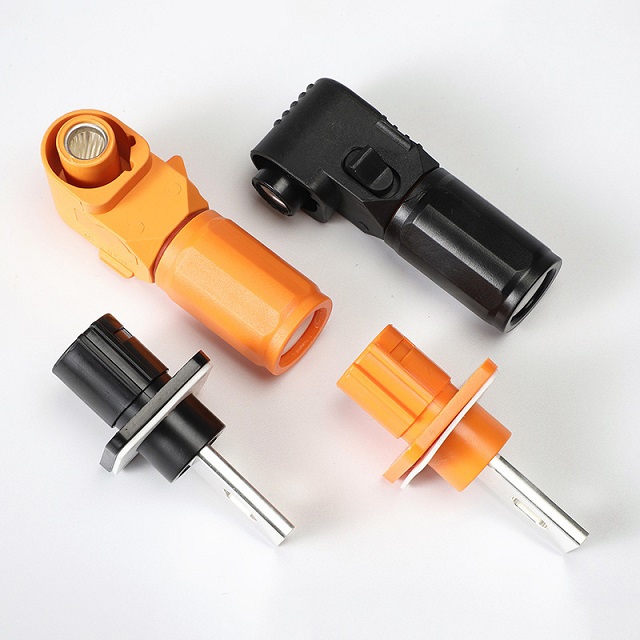
3. Assembly and Packaging
- Assembly of the plug-in unit
Use a single plug or combined plug structure to ensure that the pins are intact and accurately positioned.
Some products require elastic contact sheet compression after plugging, and use elastic force to achieve reliable connection.
Set a sealing outer lip and a stop limit structure on the injection molded shell to prevent dust and moisture from entering.
High current terminals require additional treatment to enhance conductivity and durability.
4. Quality Inspection
Detect surface scratches, cracks and other defects to ensure compliance with standards.
Measure the dimensional accuracy of injection molded parts.
Perform plug-in cycle test to verify contact reliability.
High-load products need to simulate actual working conditions for durability testing.
5. Finished Product Packaging
- Classification and sorting
Classify according to model and specification for easy storage and transportation.
The packaging material needs to be anti-static and moisture-proof to protect the finished product.
Complete the preparation of product manuals and certificates, and record process parameters and quality inspection reports.
6. Technical Optimization Direction
- Modular design
Plugs and sockets are produced independently to improve production efficiency.
- Material innovation
Explore new conductive materials and insulation encapsulation technology to reduce energy consumption.
- Automation upgrade
Introduce intelligent equipment to achieve precise detection and assembly.


