Ensuring the effective sealing of these connectors is one of the important prerequisites for ensuring the normal operation of the underwater robot system. Now we can use an emerging high-tech material-heat shrink tubing, which can achieve or exceed the effect of vulcanization, and the process is extremely simple, which can well solve the problem of sealing underwater robot connectors.
There are many underwater sensor connectors in ROV. Ensuring the effective sealing of these connectors is one of the important prerequisites for ensuring the normal operation of the underwater robot system. Now we can use an emerging high-tech material-heat shrink tubing, which can achieve or exceed the effect of vulcanization, and the process is extremely simple, which can well solve the problem of sealing underwater robot connectors.
Working Principle
Heat shrink tubing is a tubular material made of special polymers with unique "shape memory" properties. During production, the heat shrink tubing material is stretched and cooled to shape, and the molecular chain is in a stretched state; when heated to a certain temperature, the molecular chain returns to its original state, it will shrink and tightly wrap around the surface of the protected object, and maintain a fixed shape after cooling, thereby providing insulation, protection or sealing functions.
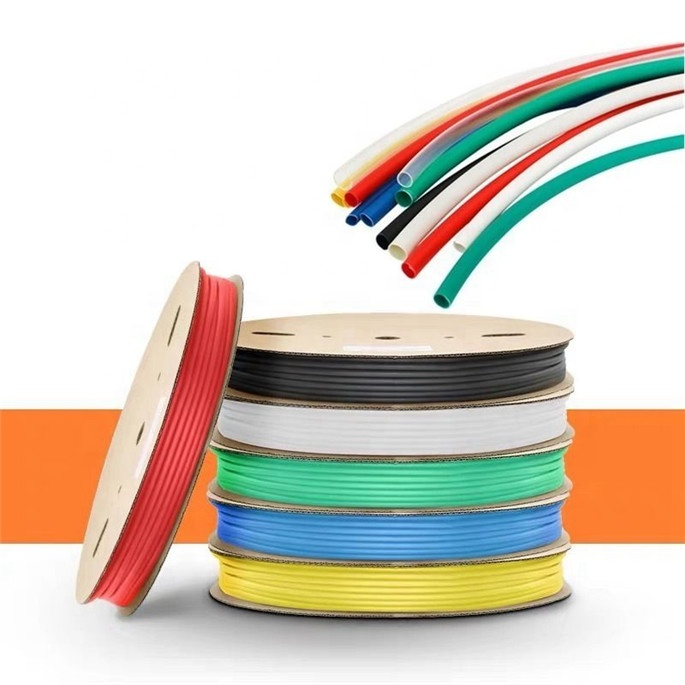
How to Choose1) Shrinkage Ratio
Such as 2:1, 3:1, determine the thickness after wrapping (inner diameter after shrinkage = outer diameter before shrinkage/ratio).
2) Temperature Range
Choose the temperature resistance grade according to the application environment (such as PVC resistant to 80℃, PTFE resistant to 260℃).
3) Material Properties
PVC: economical and versatile.
Polyolefin: flexible and good low temperature performance.
Fluoroplastic: high temperature resistant, corrosion resistant, suitable for harsh environments.
Application Requirements
1) High Pressure Environment:
Deep-sea connectors need to withstand hundreds to thousands of atmospheres (such as about 100MPa at a depth of 10,000 meters). Heat shrink tubing materials need to have low compression permanent deformation characteristics, such as cross-linked polyethylene (XLPO) or polyimide (PI).
2) Impact and Wear Resistance:
The elastic memory effect of heat shrink tubing can buffer external mechanical stress and protect internal wires and connectors from vibration and friction damage.
3) Resistance to Salt Spray and Chemical Corrosion:
Chloride ions in seawater accelerate metal oxidation, and fluoroplastics (such as PTFE) or ETFE materials can effectively isolate corrosive media.
4) Anti-biological Attachment:
Heat shrink tubing with anti-fouling coating (such as polyurethane containing silver ions) can inhibit the attachment of algae, shellfish and other organisms, reducing maintenance frequency.
5) Low Temperature Performance:
The deep sea temperature is close to 0℃, and polyolefin or TPU materials (brittle temperature below -50℃) must be selected.
6) High Temperature Stability:
Shallow sea or geothermal areas may require materials with a temperature resistance of more than 150℃ (such as FEP or polyetheretherketone PEEK).
Operation Method
1) Roughen the underwater sealing connector and the part to be sealed of the cable with sandpaper or hacksaw blade, and then wipe it clean with alcohol.
2) Select the appropriate size of heat shrink tubing according to the product manual and put it on the connector and cable.
3) Use an electric hair dryer to heat evenly from one end to the other end in a circular direction, rather than along the axis, until you see hot melt glue flowing out of both ends of the heat shrink tube.
4) If the cable is a plastic sheathed cable, apply hot melt glue at the sealing part, which is specially used with heat shrink tubes.


