The connector is the gateway for power to flow from your battery to your device, and a poor choice can lead to voltage drop, overheating, and even safety hazards. Among the most popular and trusted options are the XT90 and XT60 connectors from Amass. While both offer excellent reliability, understanding their key differences is essential for optimizing performance, safety, and value.
The connector is the gateway for power to flow from your battery to your device, and a poor choice can lead to voltage drop, overheating, and even safety hazards. Among the most popular and trusted options are the XT90 and XT60 connectors from Amass. While both offer excellent reliability, understanding their key differences is essential for optimizing performance, safety, and value. This guide provides a detailed comparison to help you make the perfect choice for your specific application.
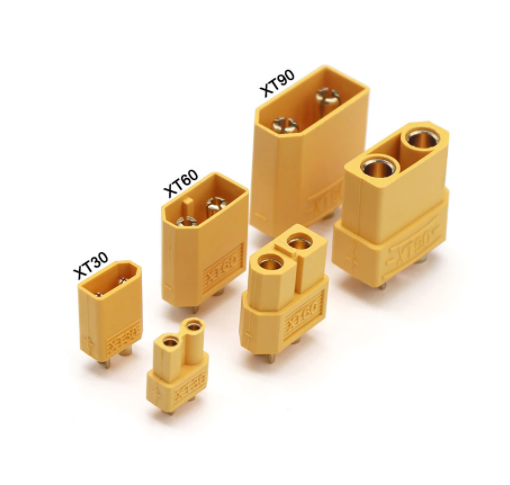
Current Handling Capacity: The Primary Determinant of Power
The most fundamental difference between these connectors lies in their continuous current rating, which dictates the amount of power they can safely transmit over extended periods.
1) XT90 Connector: As the name suggests, the XT90 is engineered for high-current applications. It is officially rated for 90 amps continuous current. This makes it the standard choice for large-scale RC models such as 1/8 and 1/5 scale buggies, truggies, and monster trucks, as well as high-performance drones, electric skateboards, and powerful LED lighting systems. Its robust design minimizes resistance and power loss under heavy load.
2) XT60 Connector: The XT60 is rated for 60 amps of continuous current. It is the quintessential workhorse for mid-range applications. This connector is ubiquitous in medium-sized RC models (1/10 scale), FPV racing drones, many commercial consumer drones, and general high-power electronic projects. It provides an ideal balance of capacity and size for a vast array of uses.
Physical Size, Weight, and Connector Design
The difference in current capacity is directly reflected in their physical dimensions and design features.
1) XT90 Connector: Significantly larger and heavier. Its bulk is necessary to accommodate thicker internal contacts and more substantial housing material to dissipate heat. A key design feature of many genuine XT90s is the spring-assisted female connector, which ensures a tight, low-resistance mating with the male plug and provides a satisfying, secure "click." This superior contact area is crucial for maintaining efficiency at high currents.
2) XT60 Connector: More compact and lightweight. Its smaller form factor is a major advantage in applications where space and weight are at a premium, such as in racing quads and aircraft. It is also slightly easier to solder due to its smaller contact pins. The trade-off for this compactness is a smaller contact surface area compared to the XT90.
Price Point and Overall Value Proposition
Cost is a practical consideration, especially for builders managing budgets across multiple projects.
1) XT60 Connector: Generally more affordable. Its lower material cost and widespread adoption make it a cost-effective solution for the majority of applications that do not require ultra-high current. The price advantage is clear when buying in bulk for club or team use.
2) XT90 Connector: Commands a higher price due to its increased material use and more complex design (e.g., spring mechanism). This investment is justified for high-performance applications where reliability under extreme load is non-negotiable. The cost of connector failure in a large, fast model can far exceed the price difference.
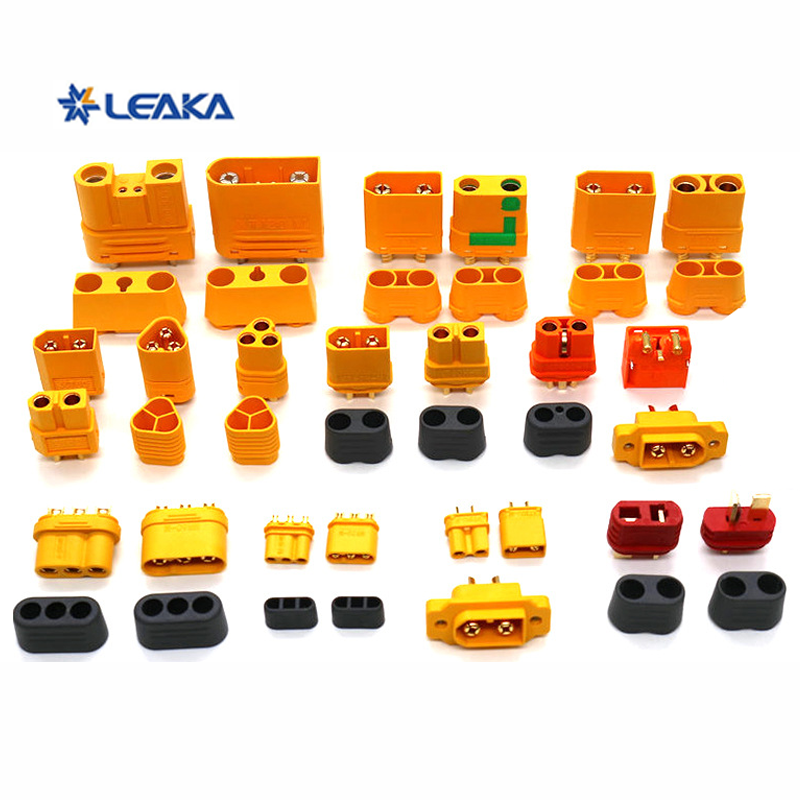 Application Scenarios: Which One Should You Choose?
1) Choose the XT90 Connector if:
Your model uses a 6S (22.2V) battery pack or higher.
The system has a peak current draw exceeding 80-100 amps.
You are powering large-scale RC vehicles (1/8 scale and up).
Your project involves high-wattage motors (2000W+), electric vehicles, or substantial power stations.
Safety and minimal voltage drop under load are your top priorities.
2) Choose the XT60 Connector if:
Your model typically uses 2S to 4S (7.4V - 14.8V) battery packs.
The system operates within a 30-50 amp continuous current range.
You are building medium 1/10 scale RC cars, most FPV drones, or general DIY power banks.
Minimizing weight and size is critical (e.g., drone racing).
You need a reliable, cost-effective connector for a wide variety of standard projects.
Pro Tips and Important Safety Notes
1) Beware of Counterfeits: The popularity of XT series connectors has led to a flood of cheap imitations. Genuine Amass connectors use high-quality materials (temperature-resistant plastic, thick copper contacts with good plating) and precise molding. Counterfeits often have poor tolerances, weak springs, and subpar plastics that melt easily.
2) Solder Correctly: Use a high-wattage soldering iron and quality solder. Ensure a clean, solid joint to minimize resistance. Applying heat for too long can damage the plastic housing.
3) Use Strain Relief: Always incorporate a strain relief (heat shrink tubing, cable ties) to prevent mechanical stress from being transferred directly to the solder joints.
Conclusion
The choice between XT90 and XT60 connectors is not about which is objectively better, but about which is perfectly matched to your specific power requirements. By carefully evaluating your system's maximum current draw, available space, and performance goals, you can select the connector that ensures optimal efficiency, safety, and reliability. For the vast middle ground of RC and electronics, the XT60 remains an unparalleled champion. For pushing the boundaries of power and performance, the XT90 is the undisputed heavyweight choice. Invest in the right connector—it is the guardian of your system's power pathway.


